
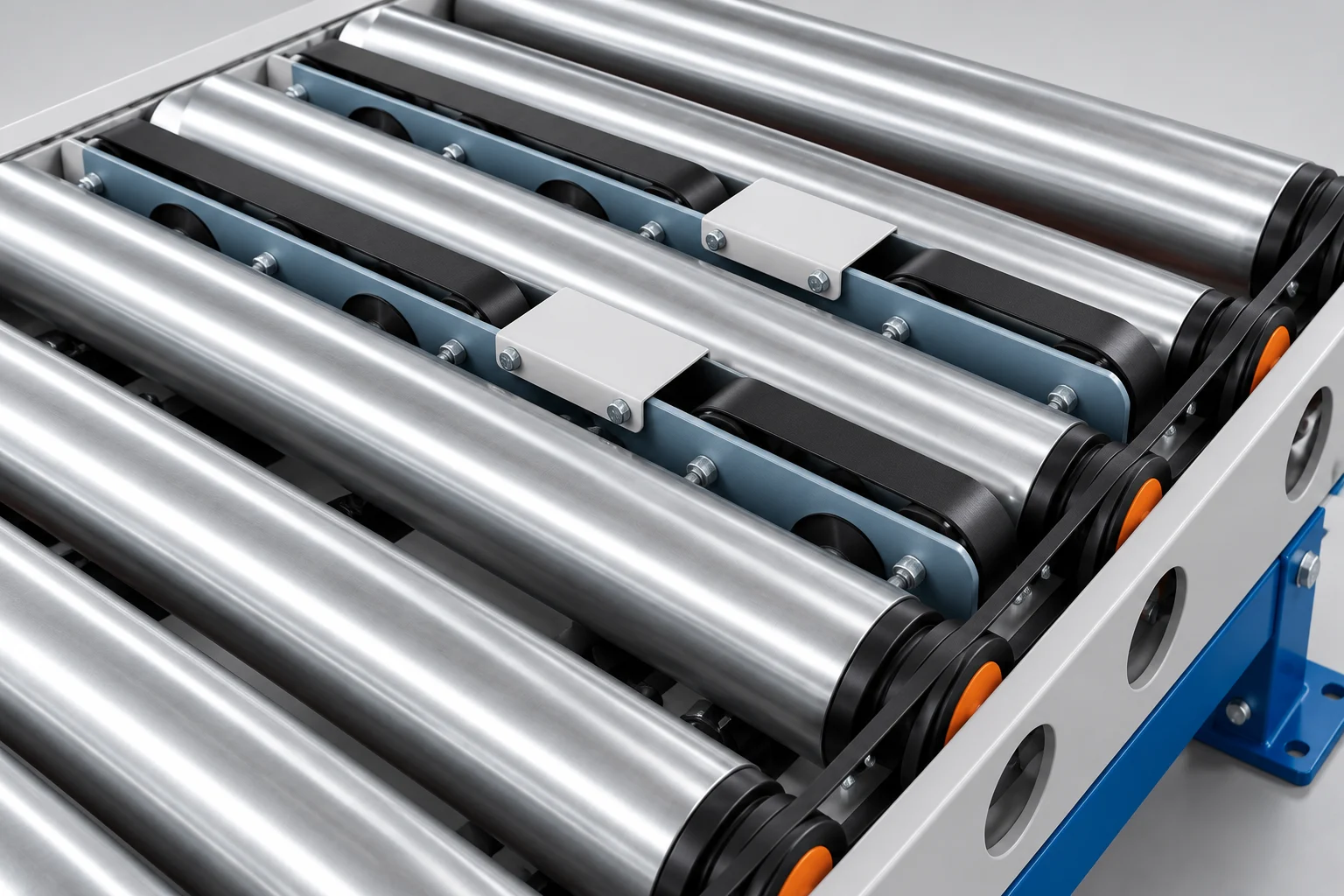
Lift clear of the roller bed
Transfer elements rise between the main rollers to take the load. The base must remain supported throughout the lift and direction change.
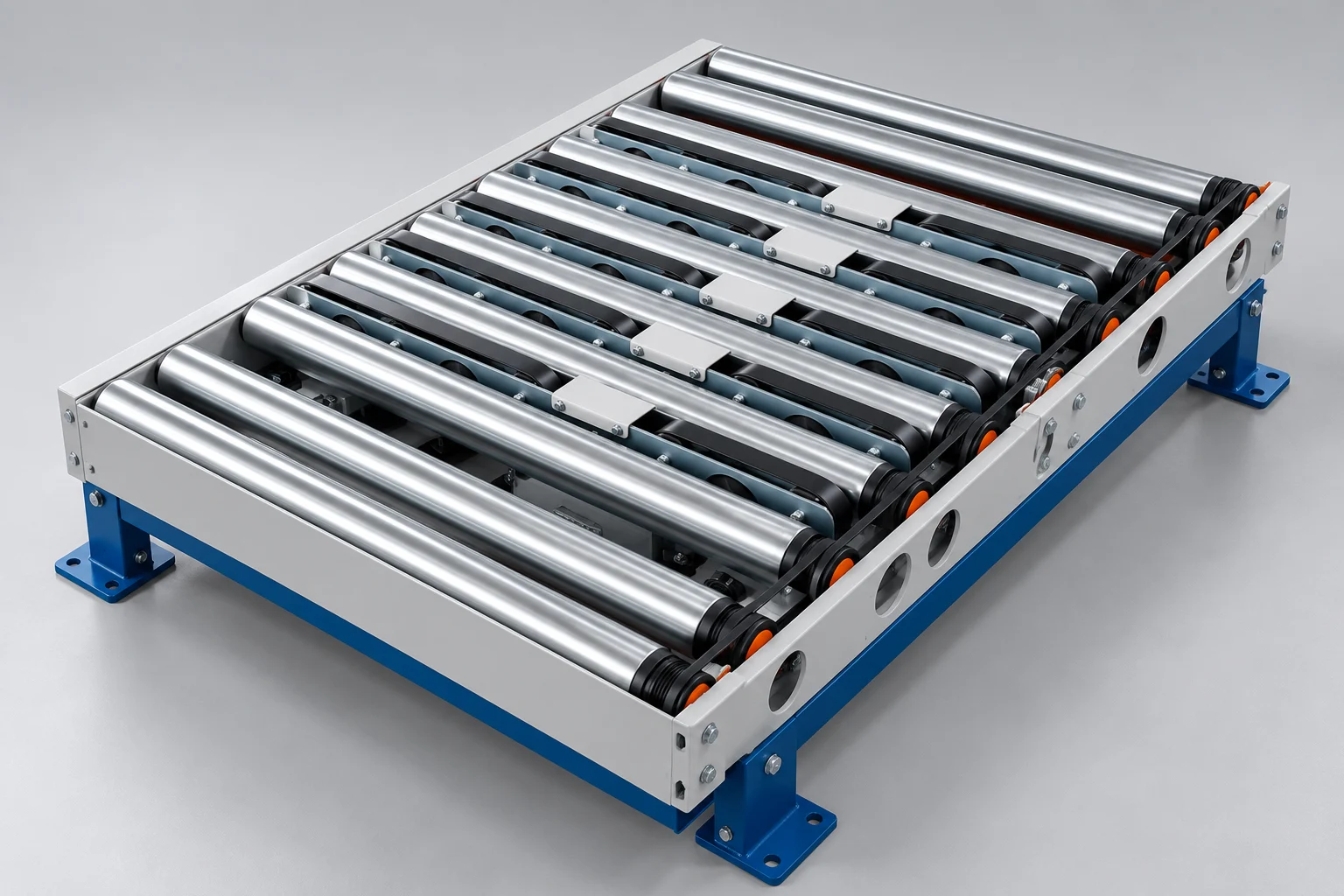
Custom-made pop-up conveyor transfers for right-angle goods movement. Configure the module width, length, transfer heights, support pattern and sequence around your adjoining lines.
Every conveyor is custom made for the client. Define the length, width, heights, conveying surface and controls around your operation, with the selected configuration and project scope set out in writing.
Estimated delivery: 60 days. Your written quotation confirms the delivery schedule, freight arrangements and responsibilities for installation and support. Two-year warranty. The written quotation specifies coverage, the commencement date, exclusions, spare parts and service arrangements.
Request a written quote ↗Illustrations show the working concept. Equipment dimensions, finishes, guarding and options are confirmed in your quotation.
Transfer elements rise between the main rollers to take the load. The base must remain supported throughout the lift and direction change.
The raised elements move goods onto the adjoining route. Match the receiving line width, height and transition gap to the smallest supported item.
Positioning, lifting, transferring and resetting each take time. Evaluate the complete sequence and interlocks rather than borrowing the speed of the parent conveyor.
The goods base must remain supported as the transfer rises, moves the load and returns below the main conveying surface. Module geometry, line gaps, receiving support and interlocks are selected together. The complete positioning, lift, transfer and reset cycle determines the operating flow.
Illustrative workflow for discussing your project. This is not a dimensioned installation drawing or a completed customer project.
The lifting transfer must support the goods between the main and side lines. Define transfer direction, stroke, goods base, cycle and position confirmation before selecting the mechanism.
For a wheel-divert route without the same lifting-transfer sequence: Wheel sorters ↗
Each pop-up transfer is made to order around the goods base and the two line interfaces. The lifting geometry, conveying movement and controls form one coordinated module.
Set the incoming and receiving line widths, heights and gaps around the goods. Select the rising transfer elements and receiving geometry to maintain support during the direction change.
Define parcel positioning, the incoming-line interlock, transfer movement and reset. Coordinate sensing and downstream availability with the required sustained flow.
These application details define the made-to-order conveyor. Include the dimensions and operating requirements you know; the remaining choices can be developed from your handling task.
The selected conveyor is configured to connect with your equipment and site. Include the destination, transfer levels, power supply and control signals. The quotation defines the delivery schedule and installation, connection and commissioning responsibilities.
Explore the configuration, integration and ordering decisions for this equipment. Send your load details and layout to discuss your own project.
Yes. Module width, length, line heights and transfer geometry are configured around the goods and adjoining equipment. Send a plan of both routes and their end gaps.
The transfer elements rise to take the load clear of the main conveying direction, move it onto the adjoining route and return. Support and control must be maintained throughout that sequence.
Provide the minimum footprint, underside shape, material and weight distribution. The base must remain supported as the lifting elements engage and as the load crosses onto the receiving conveyor.
Describe how the item is positioned and whether surrounding goods may continue moving. The incoming route must be stopped or otherwise interlocked as required by the selected lift and transfer sequence.
It has its own cycle, including positioning, lift, transfer and reset. Sustained flow must be checked against that complete sequence rather than inherited from the main conveyor’s speed.
Supply the actual incoming and outgoing levels, widths and transfer gap. The module, receiving support and movement sequence are selected to connect those interfaces for the smallest goods.
Define item detection, transfer-position confirmation, upstream release and downstream availability. The quotation sets out the module controls, interlocks and responsibility for connection to the surrounding equipment.
Module dimensions, goods load, lifting arrangement, transfer drive, sensing and cycle requirements affect the price. Mechanical adaptation and control integration with the existing lines also form part of the scope.
Estimated delivery: 60 days. The quotation confirms the custom module, schedule and integration scope. All products are CE certified, and the company holds ISO 9001 certification.
Send your name, email and handling task. If known, add the goods, desired length, usable width and inlet/outlet heights to your message. These technical details are optional.
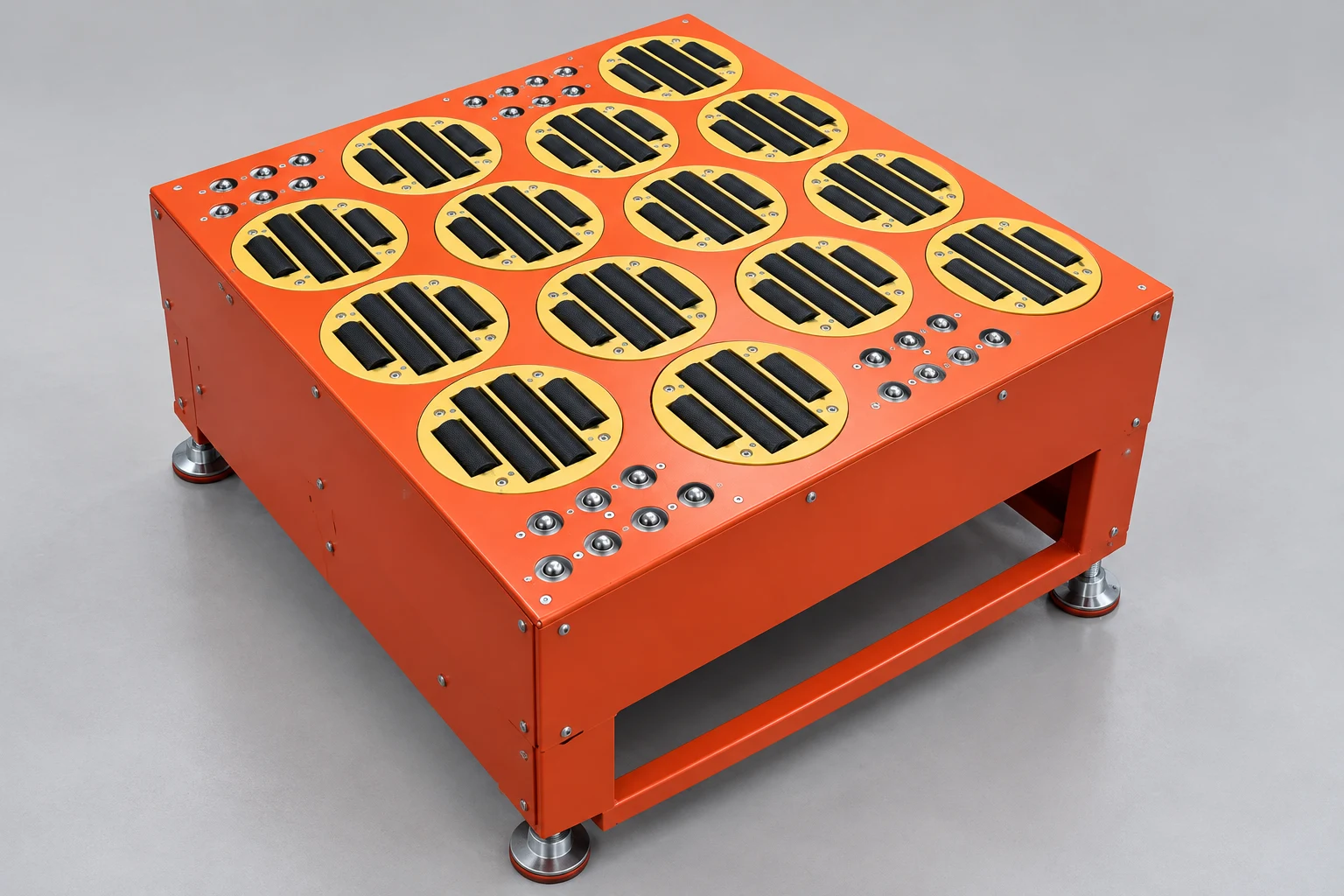
Custom-made powered wheel sorter modules for diverting supported parcels between conveyor routes. Configure module dimensions, branch geometry, drive and controls around your line.
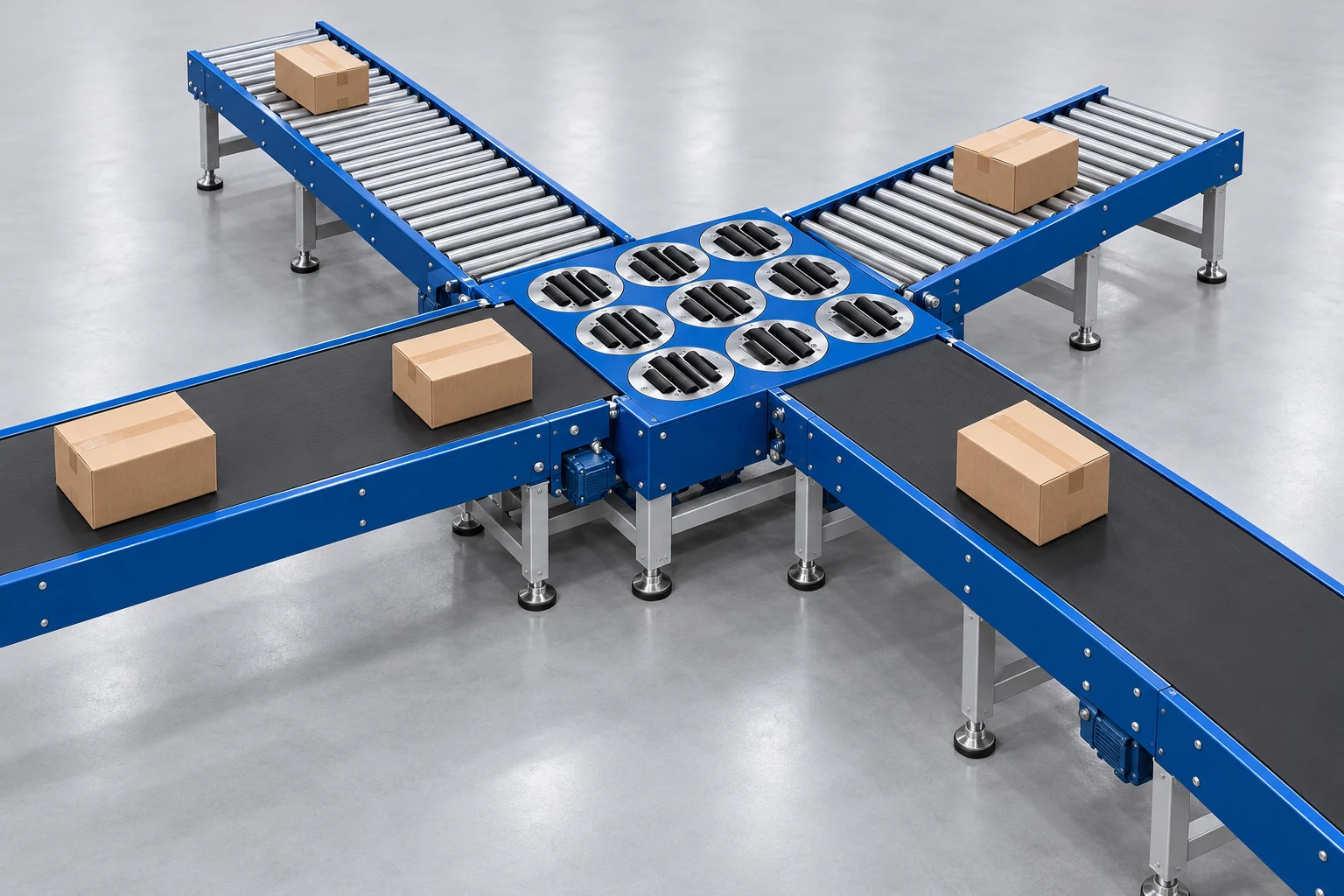
Custom-made parcel sorting systems planned around your goods, destinations and available layout. Configure conveying widths, heights, induction, diversion and controls as one routing project.
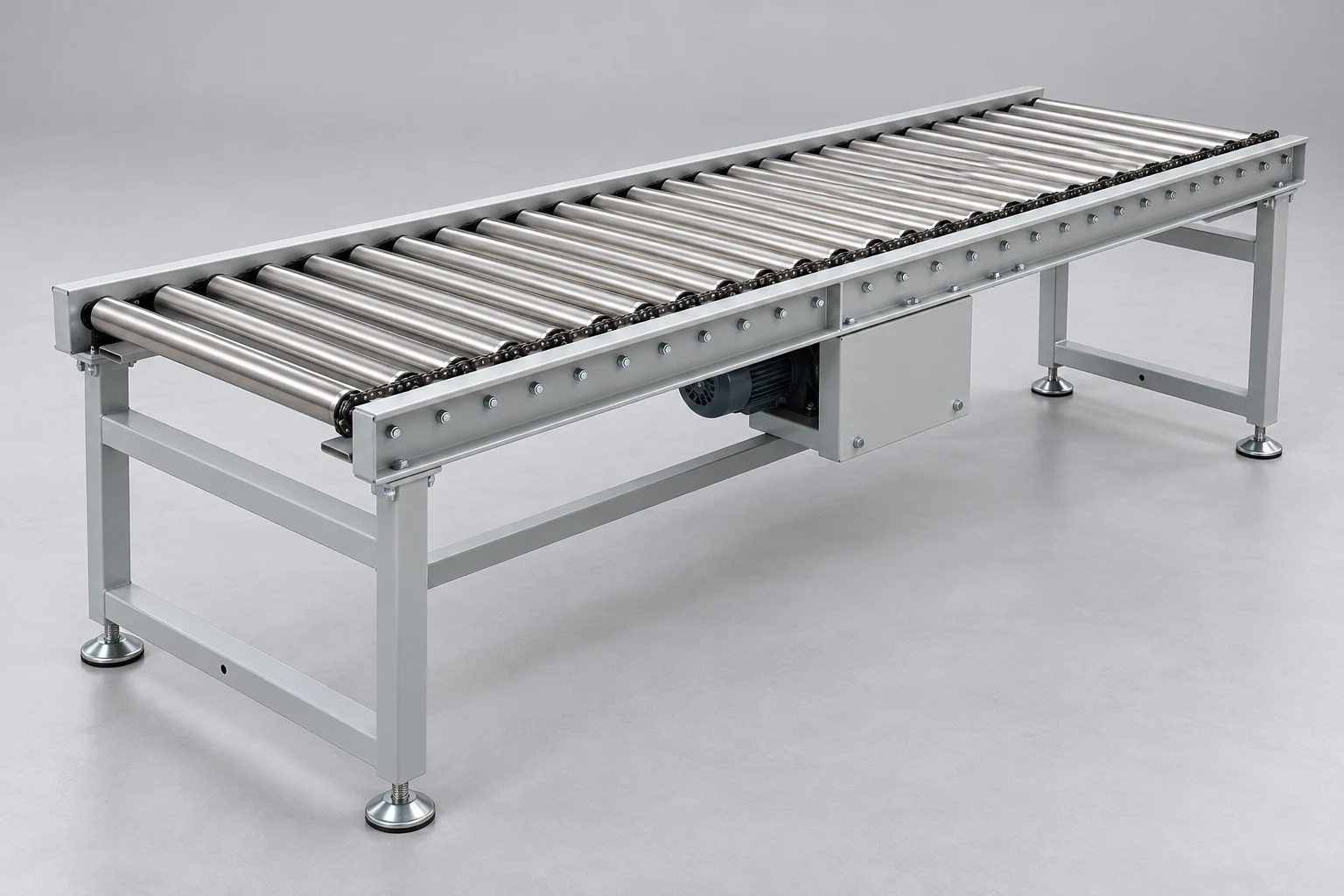
Custom-made powered roller conveyors for cartons and rigid totes. Configure the length, usable width, transfer heights, roller support and controls around your line.