
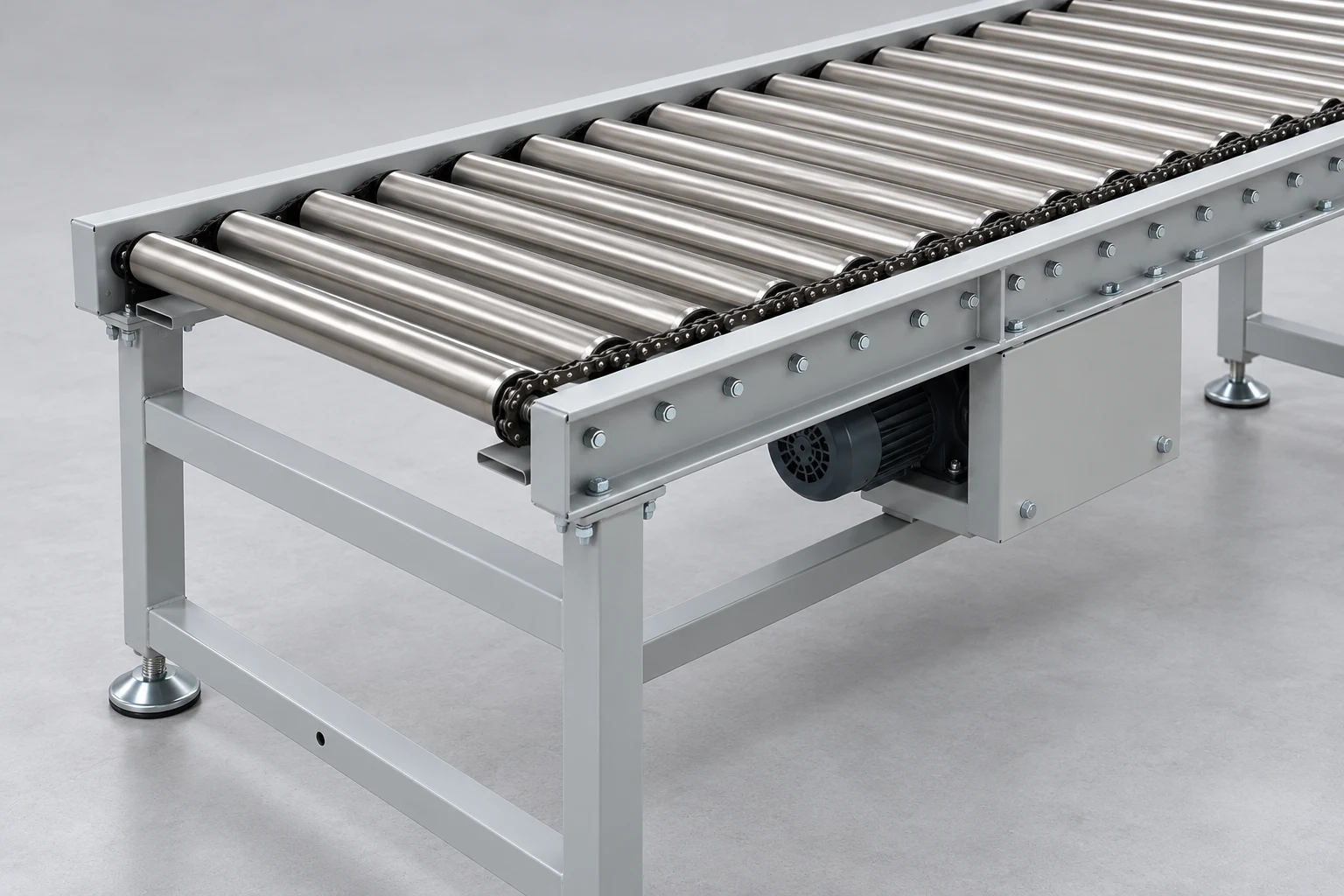
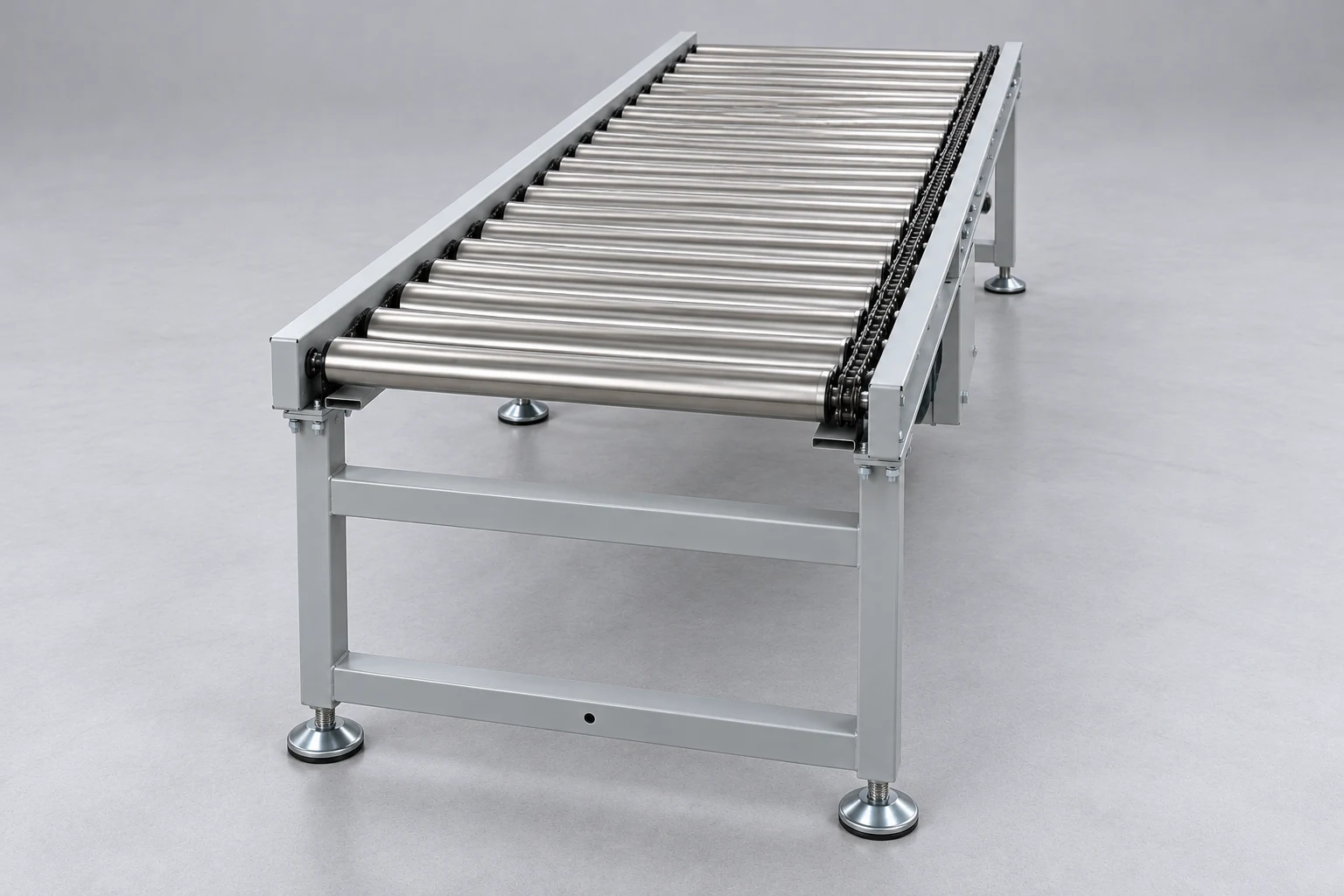
Driven roller support
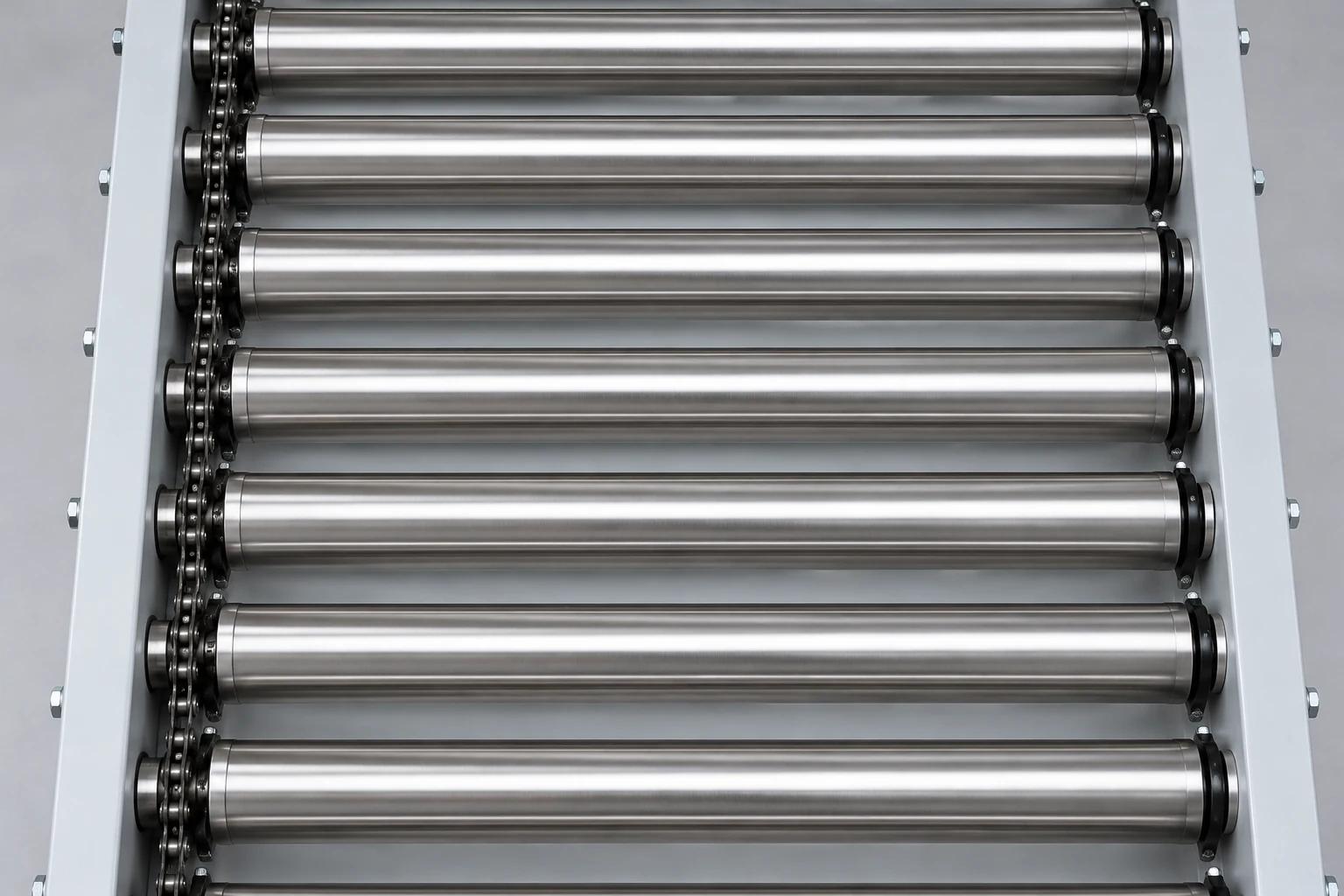
Rotating rollers move goods along the route while leaving gaps between contact points. A rigid base must span those gaps; the smallest carton determines the support assessment.
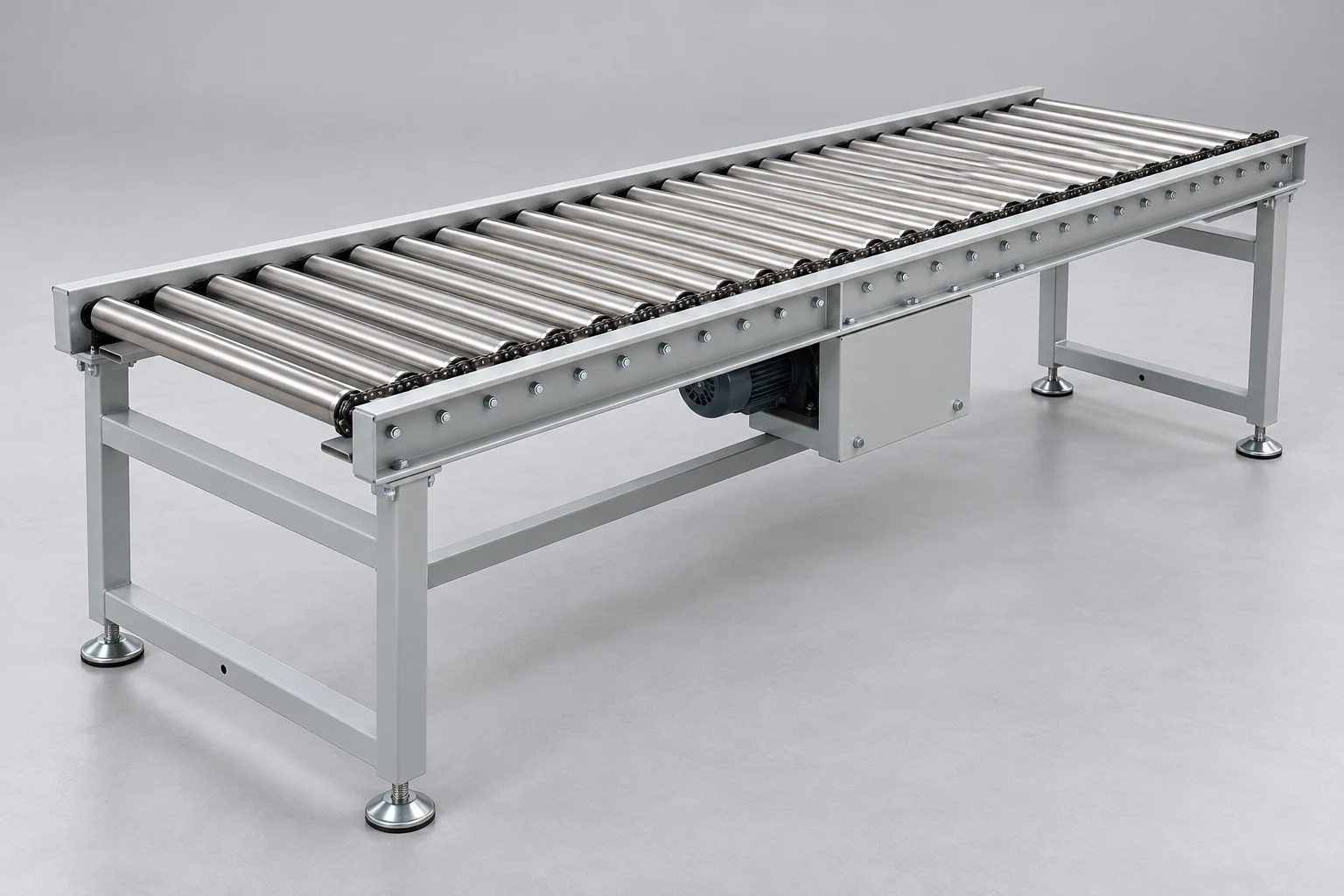
Custom-made powered roller conveyors for cartons and rigid totes. Configure the length, usable width, transfer heights, roller support and controls around your line.
Every conveyor is custom made for the client. Define the length, width, heights, conveying surface and controls around your operation, with the selected configuration and project scope set out in writing.
Estimated delivery: 60 days. Your written quotation confirms the delivery schedule, freight arrangements and responsibilities for installation and support. Two-year warranty. The written quotation specifies coverage, the commencement date, exclusions, spare parts and service arrangements.
Request a written quote ↗Illustrations show the working concept. Equipment dimensions, finishes, guarding and options are confirmed in your quotation.
Rotating rollers move goods along the route while leaving gaps between contact points. A rigid base must span those gaps; the smallest carton determines the support assessment.
A fixed line can connect workstations with straight modules and suitable curves. Curved sections need roller geometry and side clearances that keep the load supported through the turn.
Start/stop behaviour, sensing and transfers must work with the adjoining equipment. Describe any accumulation or zone control requirement for selection rather than assuming it is included.
Build the roller route around the smallest and largest goods, not just the available floor space. Roller pitch, usable width, load distribution and transfer gaps are selected together so a rigid base stays supported through straight sections, curves and connections. Fixed and expandable arrangements use distinct layouts.
Drive, expandability and carrying surface are separate decisions. Use all three to choose a starting configuration.
Powered rollers provide driven travel and selected stop/start control. Passive rollers or wheels require manual push or a suitable gradient, with a defined stopping arrangement.
A fixed line suits defined workstation and machine interfaces. An expandable frame changes working length and retracts for storage; check support at full extension and through curves. Expandable does not automatically mean powered.
Check the shortest base in its direction of travel, including entry, exit and curves. If the goods need a continuous carrying surface, compare a belt while still checking its transfer gaps and contact material.
This selection concerns cartons and rigid totes. A pallet line needs a separately specified pallet footprint, load, support and transfer arrangement; carton-conveyor references are not pallet ratings.
Illustrative workflow for discussing your project. This is not a dimensioned installation drawing or a completed customer project.
Check the smallest rigid base across roller gaps and both transfers. Specify the stop positions, sensors and any accumulation zones; they are selected parts of the control scope.
For a route that changes position or retracts after use: Powered flexible roller conveyors ↗
Each powered roller conveyor is made to order for the goods and the line it connects. Dimensions, roller support and drive choices form one configuration.
Set the straight sections, curves, transfer heights and stops around the production or packing layout. Choose the drive and control sequence for the required movement and accumulation.
Use a powered flexible frame where work positions change or the conveyor must retract for storage. Working length, stored length, support spacing and controls are selected for that arrangement.
These application details define the made-to-order conveyor. Include the dimensions and operating requirements you know; the remaining choices can be developed from your handling task.
The selected conveyor is configured to connect with your equipment and site. Include the destination, transfer levels, power supply and control signals. The quotation defines the delivery schedule and installation, connection and commissioning responsibilities.
Explore the configuration, integration and ordering decisions for this equipment. Send your load details and layout to discuss your own project.
Yes. The conveying width, route length and transfer heights are chosen for your goods, workstations and site. Roller pitch, supports and drive are selected with those dimensions rather than treated as independent options.
A stable, rigid base must bridge the gaps between rollers and remain supported at transfers. Send the minimum footprint, base material, weight range and a photo of the underside, especially for containers with feet or ribs.
Straight sections and suitable curves can be included in the proposed layout. The roller geometry, usable width, guides and transfer gaps must keep the smallest load stable through each turn.
Describe whether goods may touch, need defined separation or must stop in individual zones. That requirement determines the sensing, drive zones and stop/start logic; accumulation behaviour is specified for the selected configuration.
Provide item weight, distribution along the route, required items per minute and hours of use. The drive, roller support and controls are selected against that operating case, including starts, stops and peak loading.
No. Powered describes driven movement, while fixed or expandable describes the frame and layout. A fixed production line and a flexible dispatch route are configured separately.
Yes, the proposal can be based on your existing machine positions. Send transfer heights, line widths, end gaps, power supply and control signals so the mechanical and control interfaces are defined together.
Length, width, roller specification, supported load, drive arrangement, curves and control zones affect the cost. The quotation also identifies the requested installation, delivery and integration scope.
Estimated delivery: 60 days, with the schedule confirmed in the written quotation. All products are CE certified; the company is registered in Lithuania and holds ISO 9001 certification.
Send your name, email and handling task. If known, add the goods, desired length, usable width and inlet/outlet heights to your message. These technical details are optional.
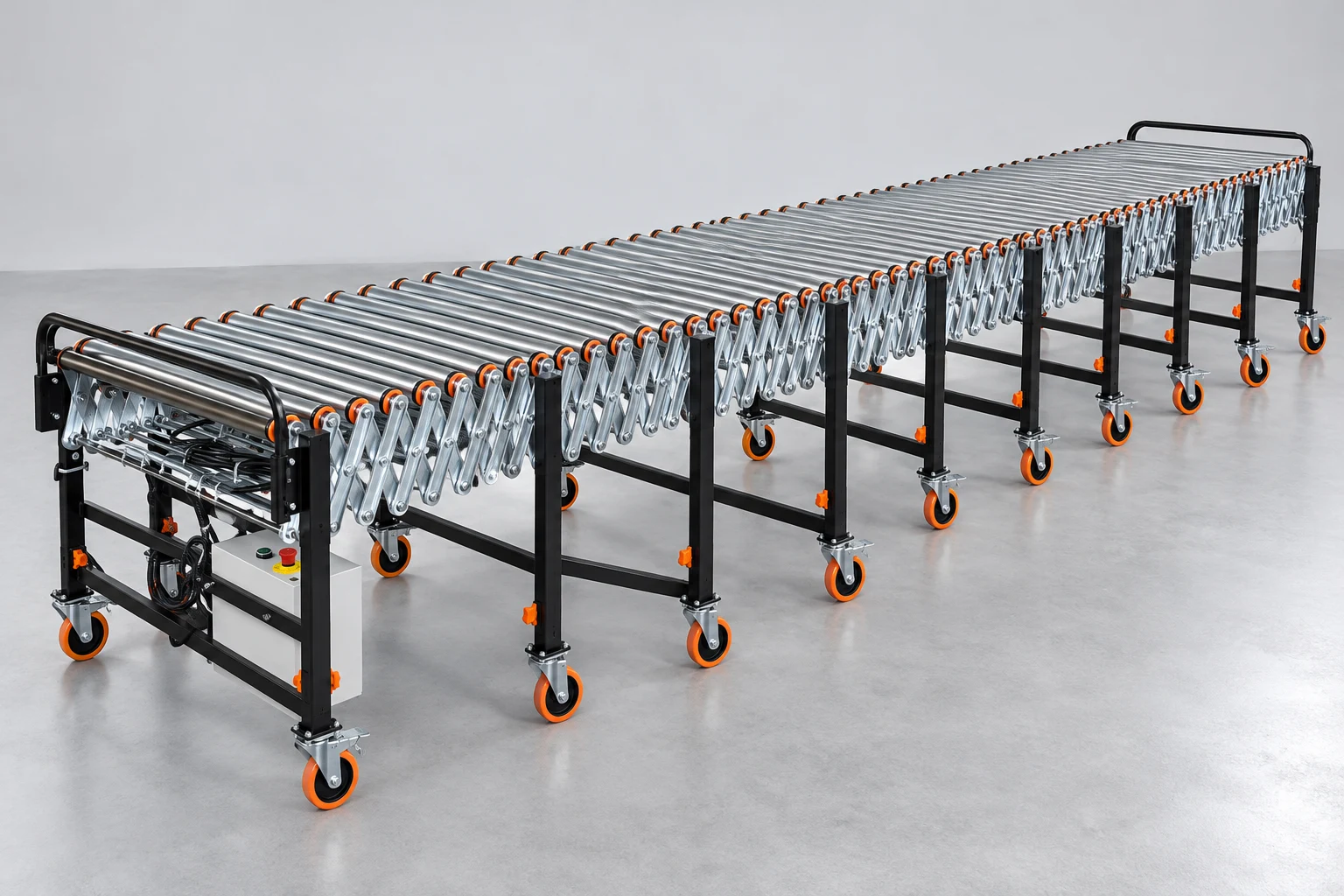
Custom-made powered flexible roller conveyors for changing packing and dispatch routes. Choose working and retracted lengths, width, height and drive controls together.
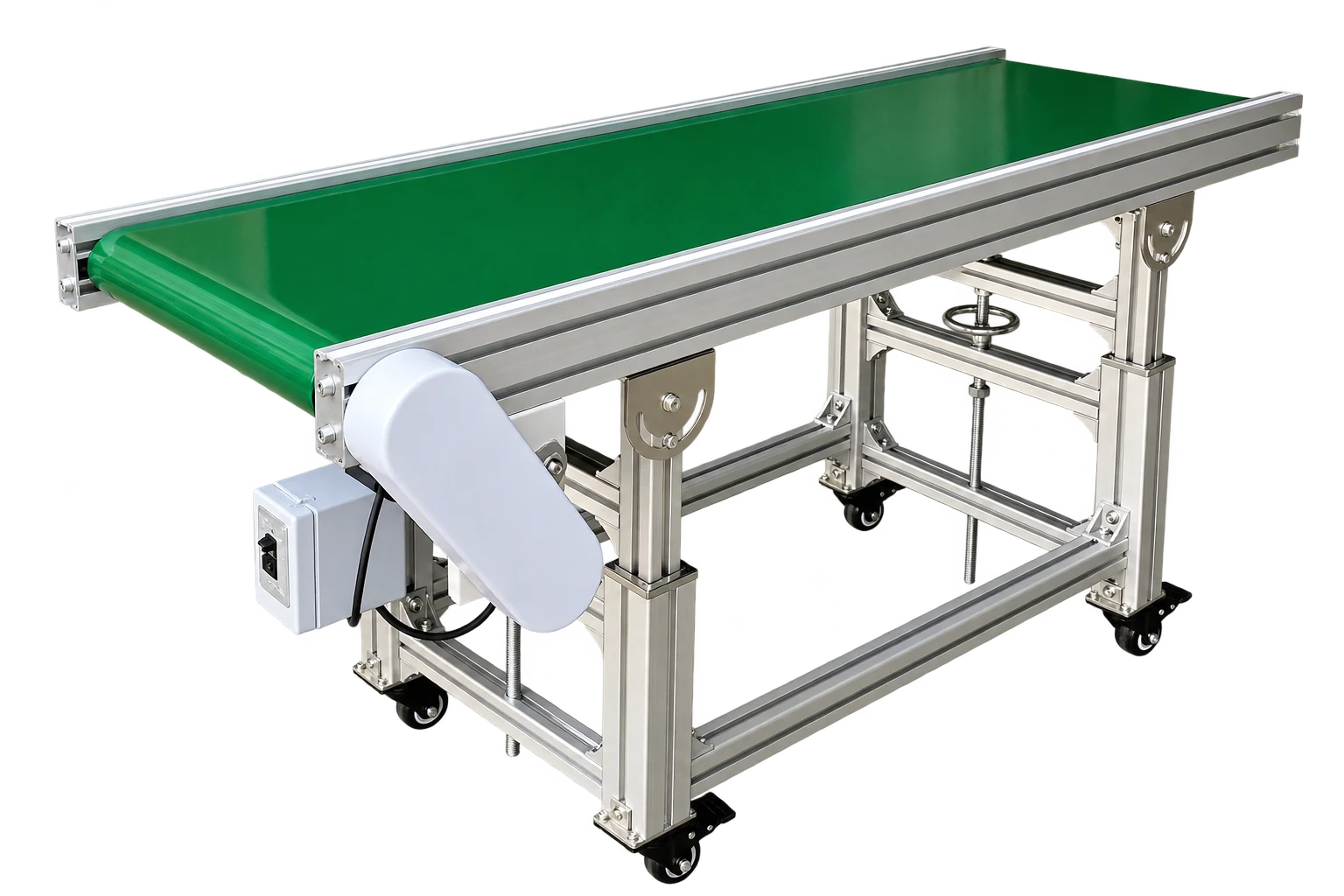
Custom-made belt conveyors for cartons and unit loads. Configure the length, width, transfer heights, belt surface and controls to connect your handling process.
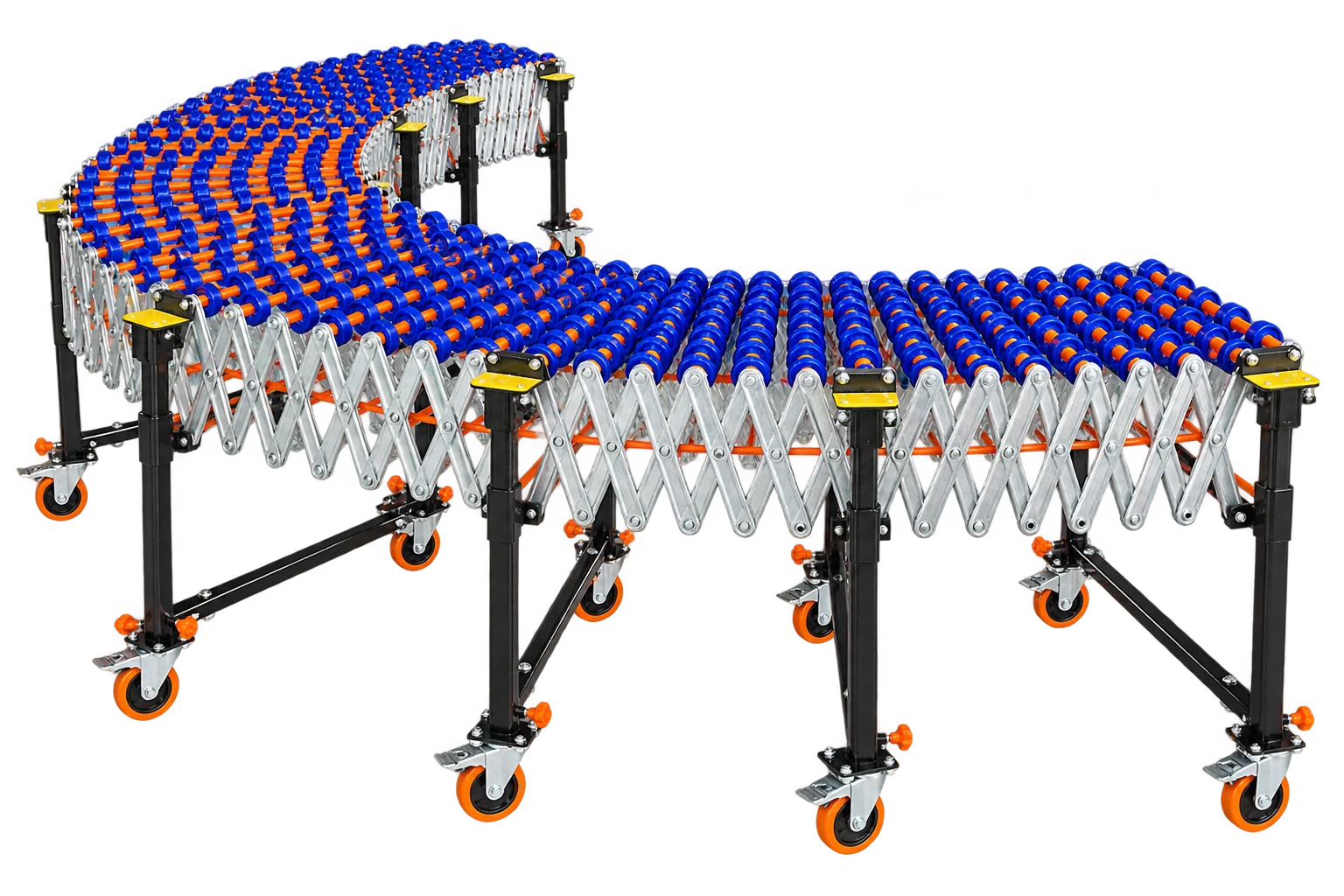
Custom-made gravity skatewheel conveyors for flat-bottom cartons. Configure the expandable frame, working width, heights and small-wheel support around the manual or gravity route.