
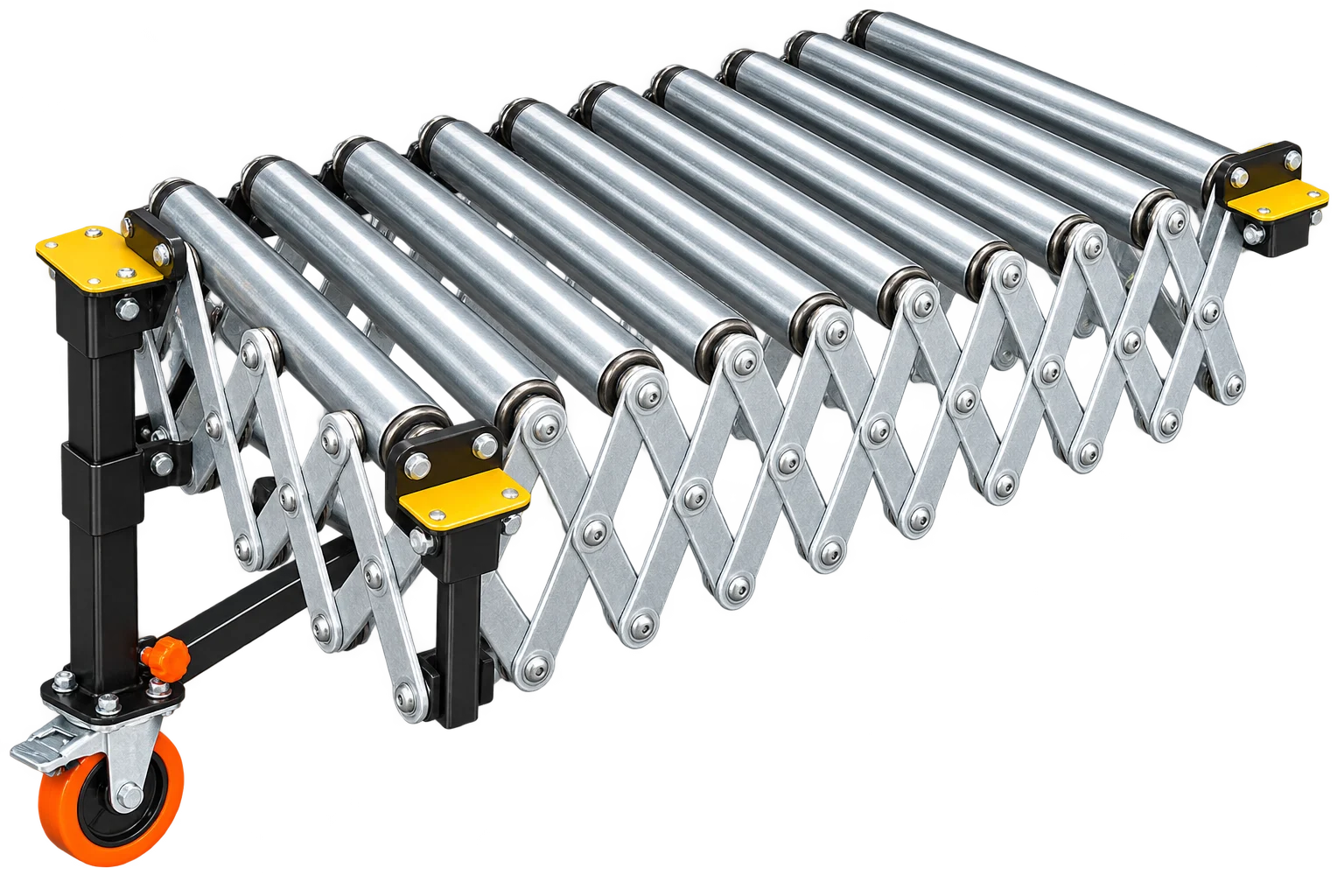
Full-width passive rollers
Each freely turning roller spans the conveying width. The goods base must bridge the gaps and remain stable through curves and changes in roller spacing.
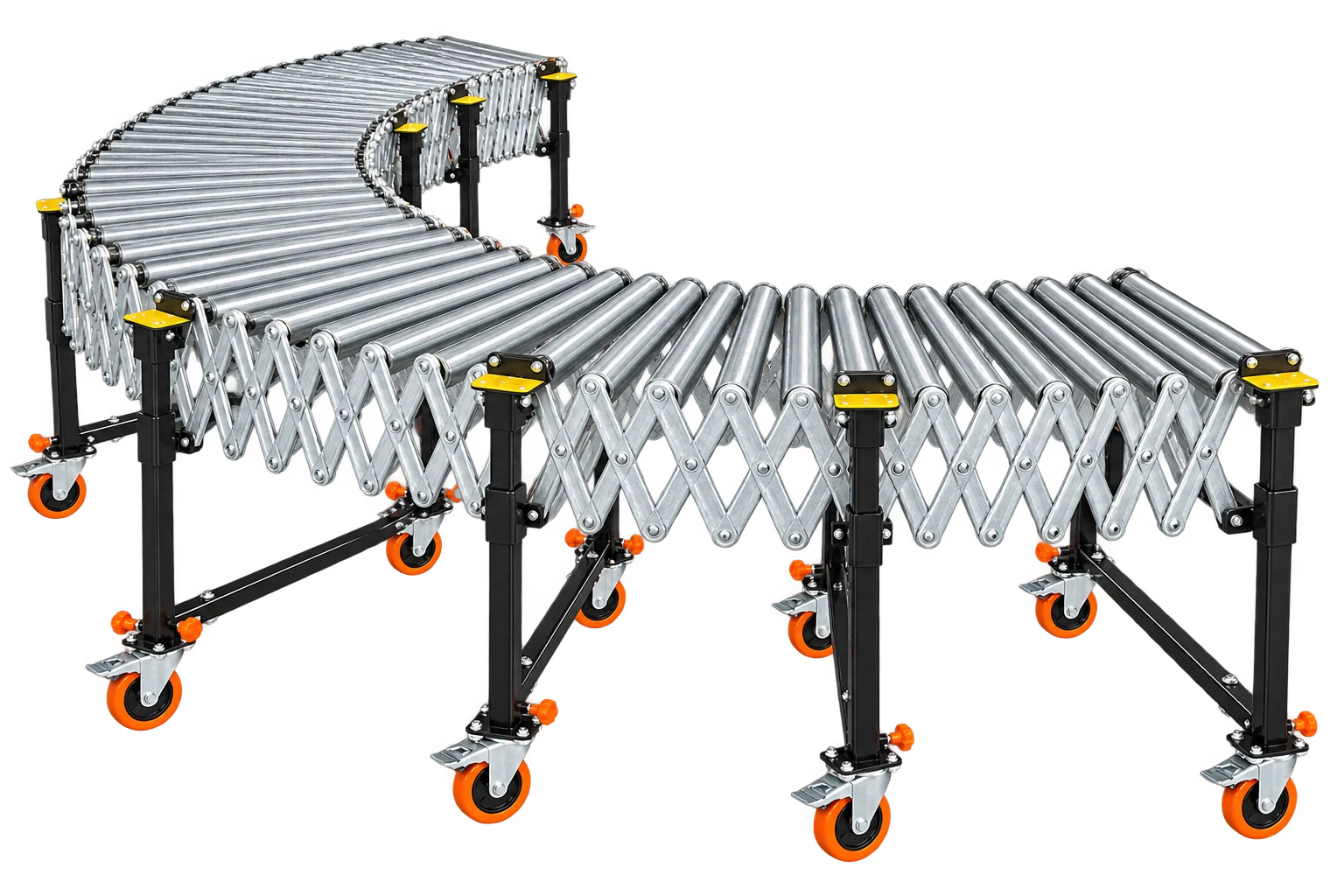
Custom-made expandable gravity roller conveyors for cartons and rigid totes. Configure working and stored lengths, width, heights and roller spacing around your handling route.
Every conveyor is custom made for the client. Define the length, width, heights, conveying surface and controls around your operation, with the selected configuration and project scope set out in writing.
Estimated delivery: 60 days. Your written quotation confirms the delivery schedule, freight arrangements and responsibilities for installation and support. Two-year warranty. The written quotation specifies coverage, the commencement date, exclusions, spare parts and service arrangements.
Request a written quote ↗Illustrations show the working concept. Equipment dimensions, finishes, guarding and options are confirmed in your quotation.
Each freely turning roller spans the conveying width. The goods base must bridge the gaps and remain stable through curves and changes in roller spacing.
There is no motorized drive. A suitable downward gradient or operator input moves the goods. Include end stops, receiving positions and the intended gradient in the layout.
Scissor side links let the conveyor extend, curve and contract for storage. Adjustable legs and braked castors help position it; check goods support at the longest working length.
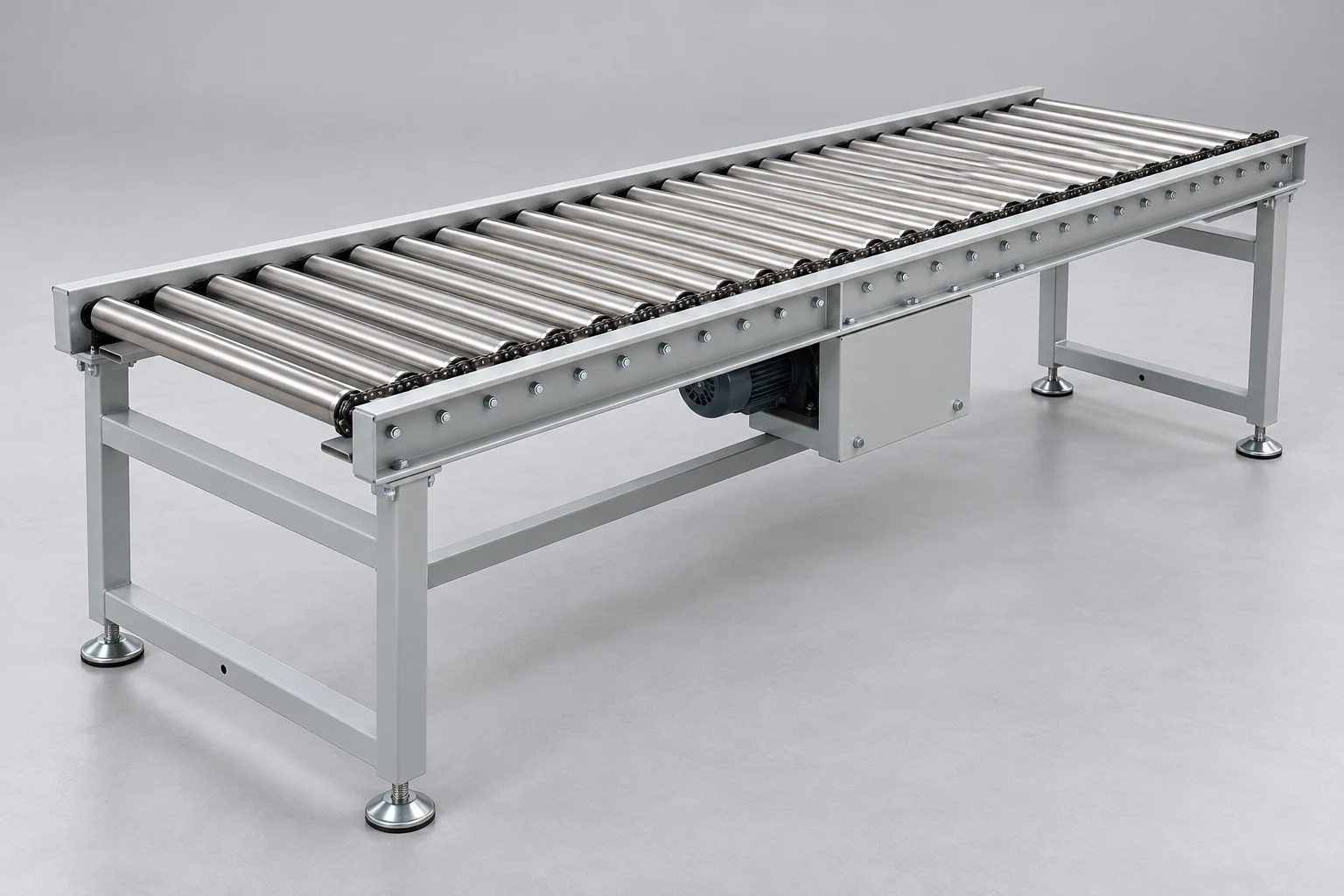
Use full-width freely turning rollers for goods with a base that bridges the support gaps. Frame extension and curves change the contact beneath the load, so the smallest item, load distribution and intended gradient are considered together. The layout includes receiving stops, manual handling positions and stable mobile supports.
Illustrative workflow for discussing your project. This is not a dimensioned installation drawing or a completed customer project.
Free-turning rollers need a suitable gradient or manual push. Confirm the base, roller pitch, arrival speed and stop arrangement; do not assume powered travel or accumulation control.
For driven movement on an expandable route: Powered flexible roller conveyors ↗
Each gravity roller conveyor is made to order for the goods, working route and handling method. Frame dimensions and roller support are selected together.
Choose working and retracted lengths, usable width, curves and support spacing for the goods. Reserve the movement path and storage envelope as well as the working route.
Set the inlet and outlet heights around the intended gravity or manual movement. Define how goods enter, are stopped and are received at the end of the route.
Every conveyor is made to order. These dimensions are configuration references, not a limit on the width, length or working height you can request. We select the final dimensions and options together for your goods and layout.
Carbon-steel rollers are the standard reference. Alternative materials and additional options are quoted separately.
Send your required length, usable width, inlet and outlet heights, and goods dimensions and weight. Include any requirements outside these reference sizes for configuration review.
These application details define the made-to-order conveyor. Include the dimensions and operating requirements you know; the remaining choices can be developed from your handling task.
The selected conveyor is configured to connect with your equipment and site. Include the destination, transfer levels, power supply and control signals. The quotation defines the delivery schedule and installation, connection and commissioning responsibilities.
Explore the configuration, integration and ordering decisions for this equipment. Send your load details and layout to discuss your own project.
Yes. Working length, stored length, width and heights are configured around your goods and operating space. The roller pitch, frame extension and support positions are chosen together.
No. These rollers turn freely. Goods move by a suitable downward gradient or manual push; choose a powered roller conveyor when the route requires driven movement.
The required gradient depends on the item base, weight, roller behaviour and receiving arrangement. Provide the inlet and outlet heights and representative goods; a universal slope would not describe every operating case.
The base must be sufficiently rigid and supported across the roller gaps. The smallest footprint, ribs or feet, weight distribution and condition of the underside matter alongside overall item size.
Extending the frame increases the distance between rollers. The smallest base must still bridge the gaps through the intended maximum extension and the curves in the working route.
A passive roller conveyor cannot drive goods uphill or command a fixed transport speed. The layout must account for manual input or gravity movement, including how goods are stopped and received.
Yes. Set the working heights, end gaps and goods transfer direction around the adjacent equipment. Include operator access, end stops and stable support at the operating position.
Working and retracted dimensions, width, roller specification, height adjustment, supports and transfer details affect the cost. Curves, stops and the requested delivery or installation scope are included in the project quotation.
Estimated delivery: 60 days, confirmed for the selected configuration in the written quotation. All products are CE certified; ISO 9001 is held by the company.
Send your name, email and handling task. If known, add the goods, desired length, usable width and inlet/outlet heights to your message. These technical details are optional.
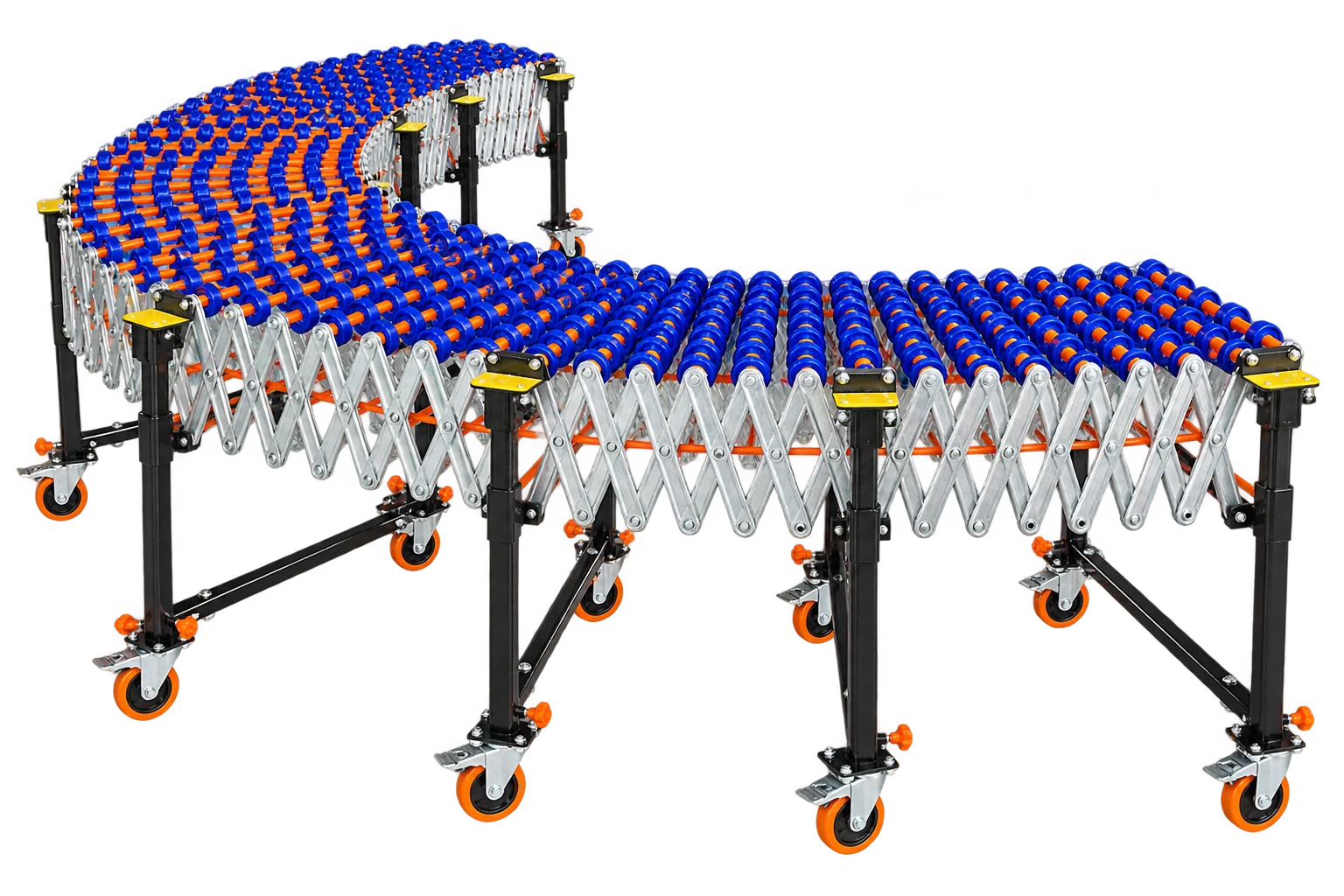
Custom-made gravity skatewheel conveyors for flat-bottom cartons. Configure the expandable frame, working width, heights and small-wheel support around the manual or gravity route.
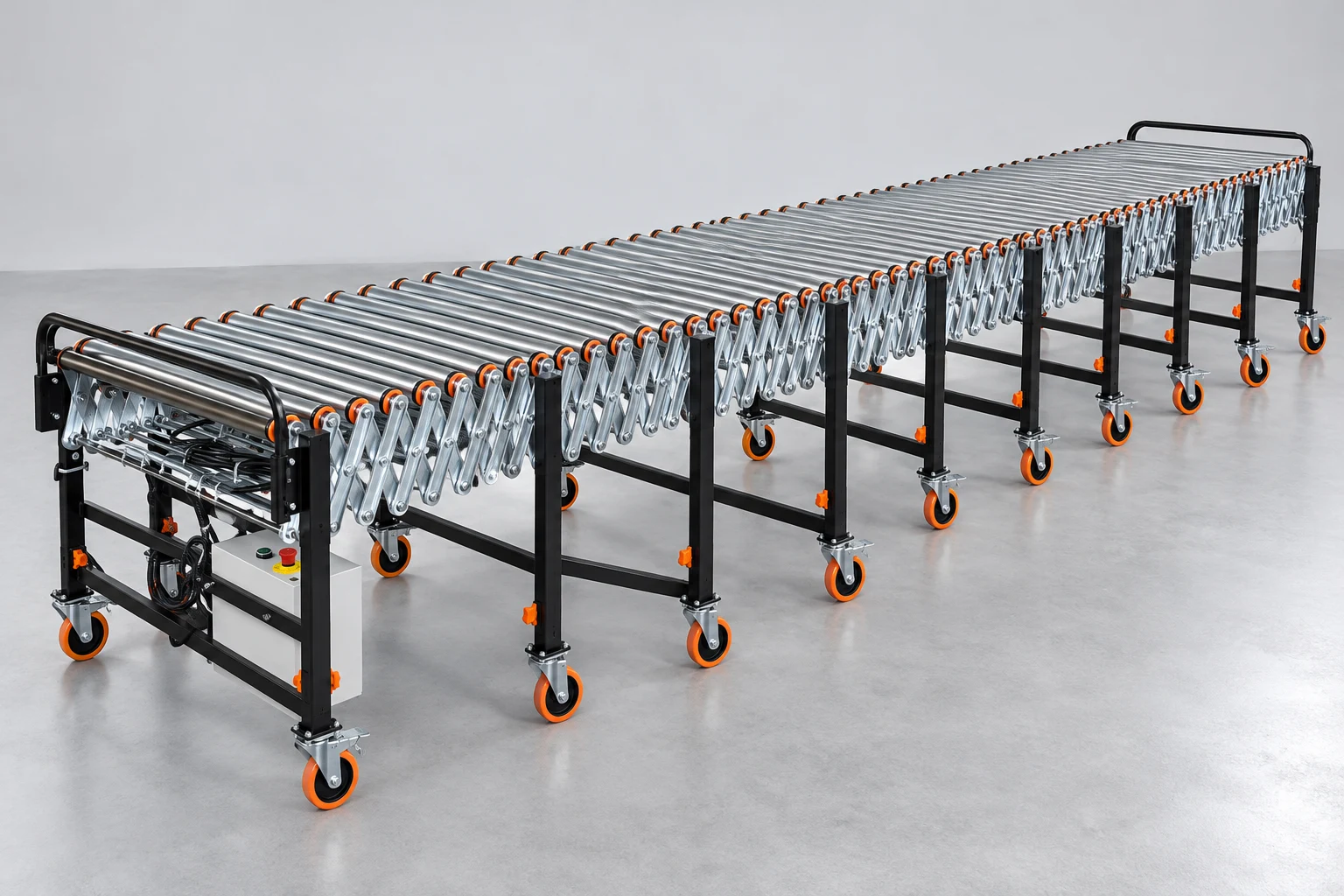
Custom-made powered flexible roller conveyors for changing packing and dispatch routes. Choose working and retracted lengths, width, height and drive controls together.
Custom-made powered roller conveyors for cartons and rigid totes. Configure the length, usable width, transfer heights, roller support and controls around your line.