
01 — Driven or passive movement?
Powered rollers provide driven travel and selected stop/start control. Passive rollers or wheels require manual push or a suitable gradient, with a defined stopping arrangement.
Every roller conveyor is made to order for the goods, working route and site. Start with the smallest carton base, then choose driven movement or gravity/manual handling. Configure length, usable width, heights, roller support and controls together; a flexible frame also needs defined working and retracted positions.
Drive, expandability and carrying surface are separate decisions. Use all three to choose a starting configuration.
Powered rollers provide driven travel and selected stop/start control. Passive rollers or wheels require manual push or a suitable gradient, with a defined stopping arrangement.
A fixed line suits defined workstation and machine interfaces. An expandable frame changes working length and retracts for storage; check support at full extension and through curves. Expandable does not automatically mean powered.
Check the shortest base in its direction of travel, including entry, exit and curves. If the goods need a continuous carrying surface, compare a belt while still checking its transfer gaps and contact material.
This selection concerns cartons and rigid totes. A pallet line needs a separately specified pallet footprint, load, support and transfer arrangement; carton-conveyor references are not pallet ratings.
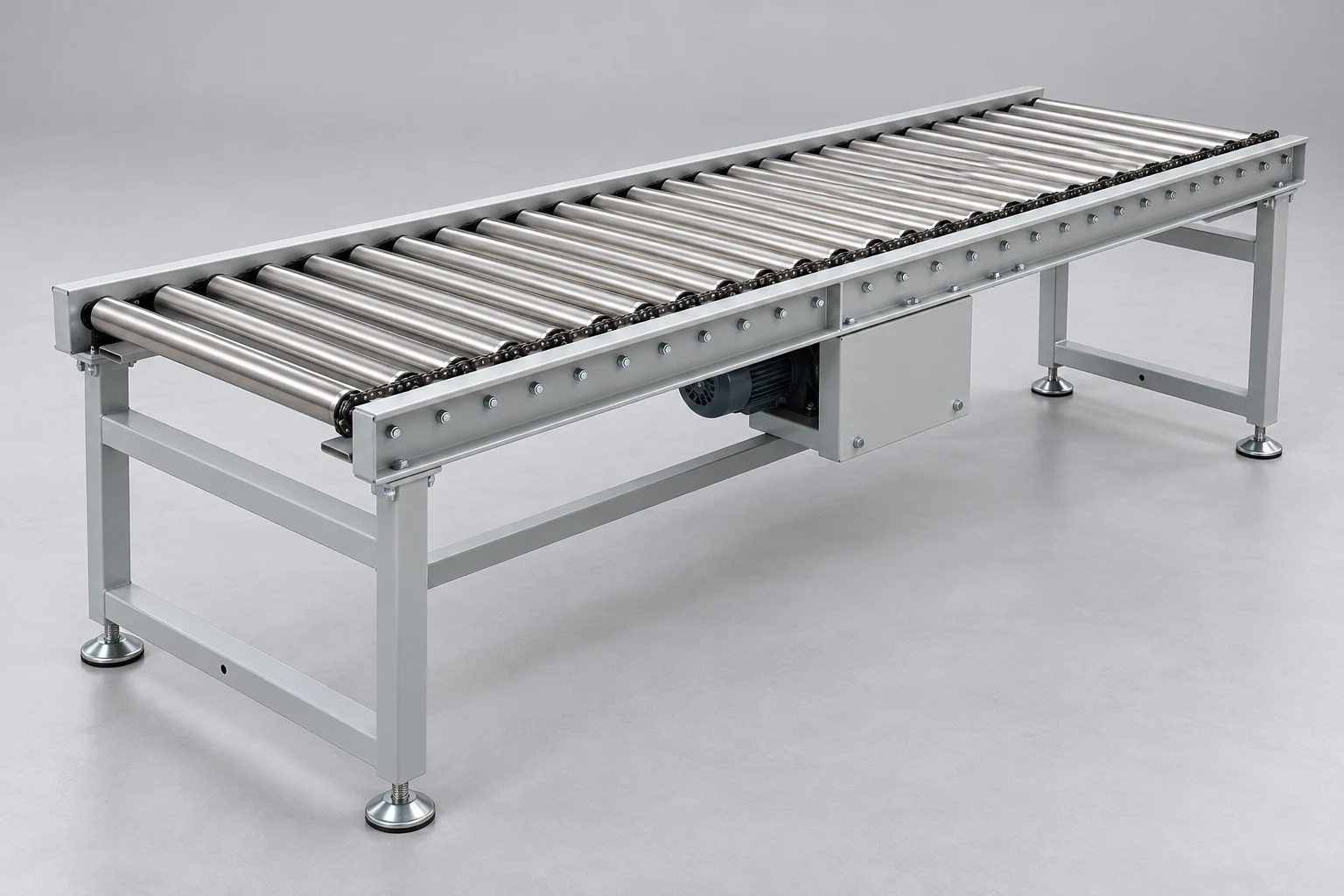
Custom-made powered roller conveyors for cartons and rigid totes. Configure the length, usable width, transfer heights, roller support and controls around your line.
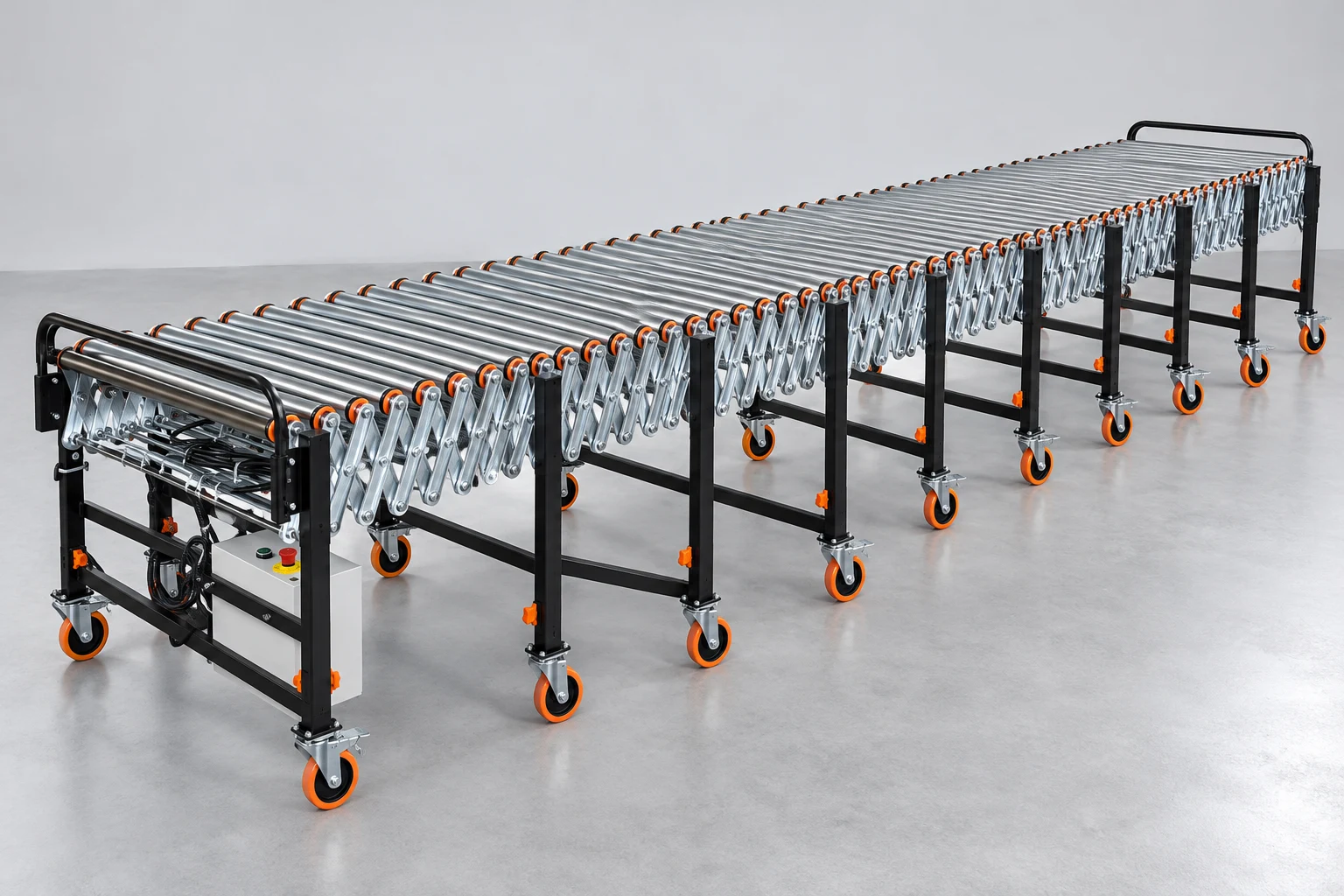
Custom-made powered flexible roller conveyors for changing packing and dispatch routes. Choose working and retracted lengths, width, height and drive controls together.
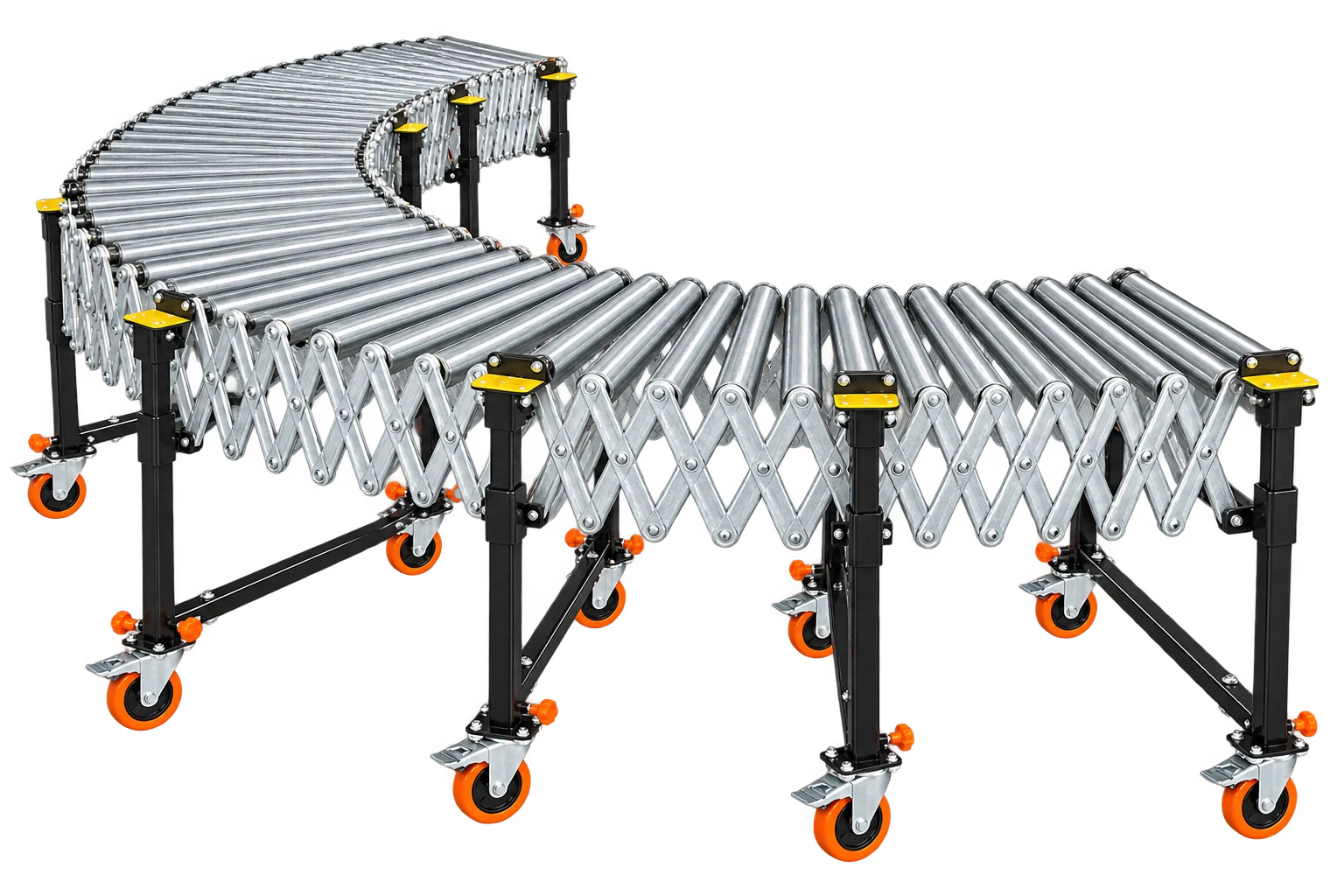
Custom-made expandable gravity roller conveyors for cartons and rigid totes. Configure working and stored lengths, width, heights and roller spacing around your handling route.
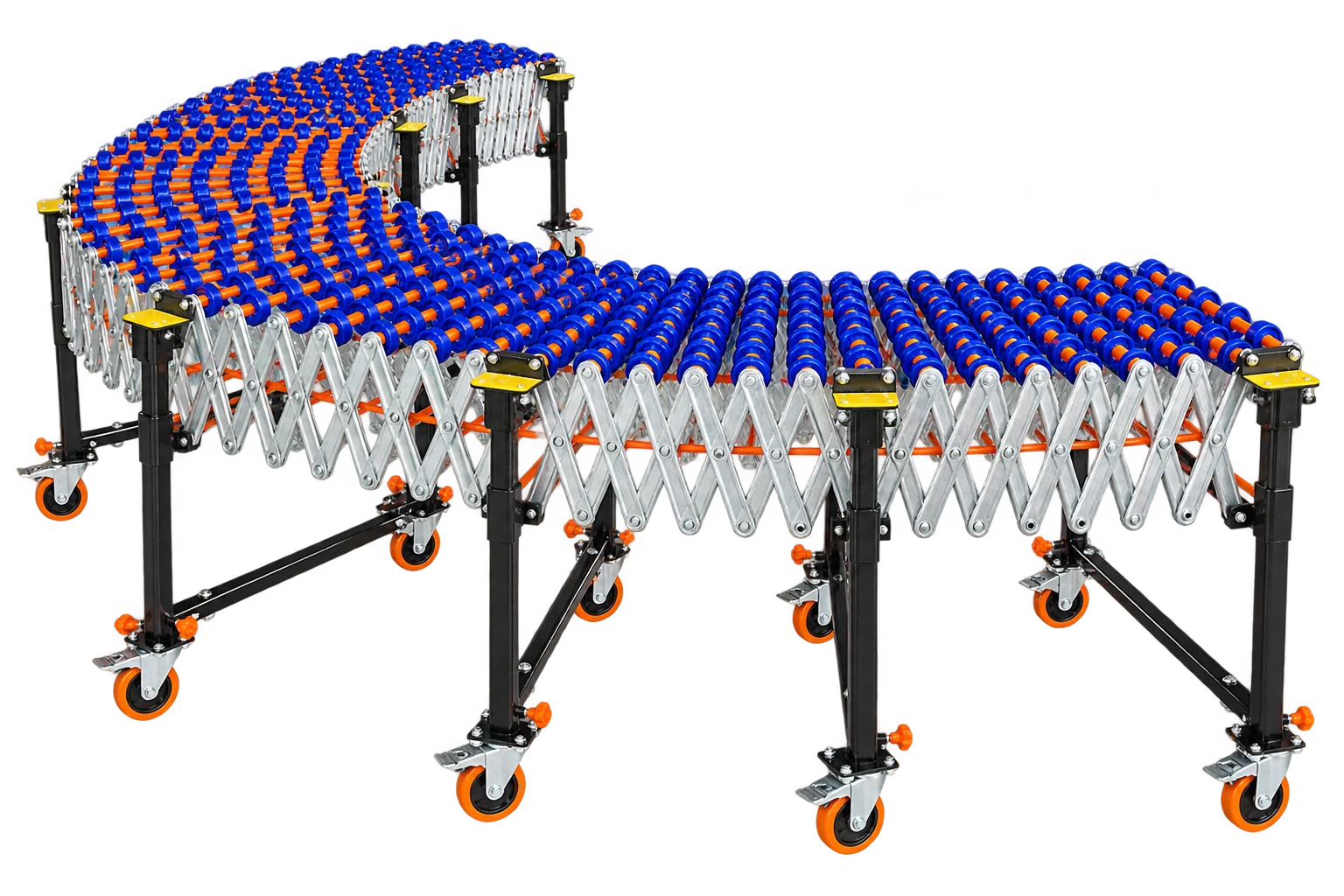
Custom-made gravity skatewheel conveyors for flat-bottom cartons. Configure the expandable frame, working width, heights and small-wheel support around the manual or gravity route.
Choose powered rollers when the route needs driven movement. Gravity rollers turn freely and need a suitable downward gradient or manual push. Check the goods base, stopping positions and connections to neighbouring equipment before selecting the layout.
No. Flexible describes an expandable frame, rather than the drive. Both powered and passive roller conveyors can extend, curve and retract. Check the smallest goods base at the required extension and through every curve.
Gravity rollers span the conveying width. Skatewheels support the goods on rows of separate small wheels. Both are passive, and the goods base must remain supported across their different contact patterns.
Share the minimum and maximum goods dimensions and weight, base material, route length, inlet and outlet heights and destination. For an expandable route, include working length and storage space. A short description is enough to begin.
Every conveyor is custom made for the client. Define the length, width, heights, conveying surface and controls around your operation, with the selected configuration and project scope set out in writing.
Estimated delivery: 60 days. Your written quotation confirms the delivery schedule, freight arrangements and responsibilities for installation and support. Two-year warranty. The written quotation specifies coverage, the commencement date, exclusions, spare parts and service arrangements.
Request a written quote ↗Send your name, email and handling task. If known, add the goods, desired length, usable width and inlet/outlet heights to your message. These technical details are optional.