
Belt and roller combination
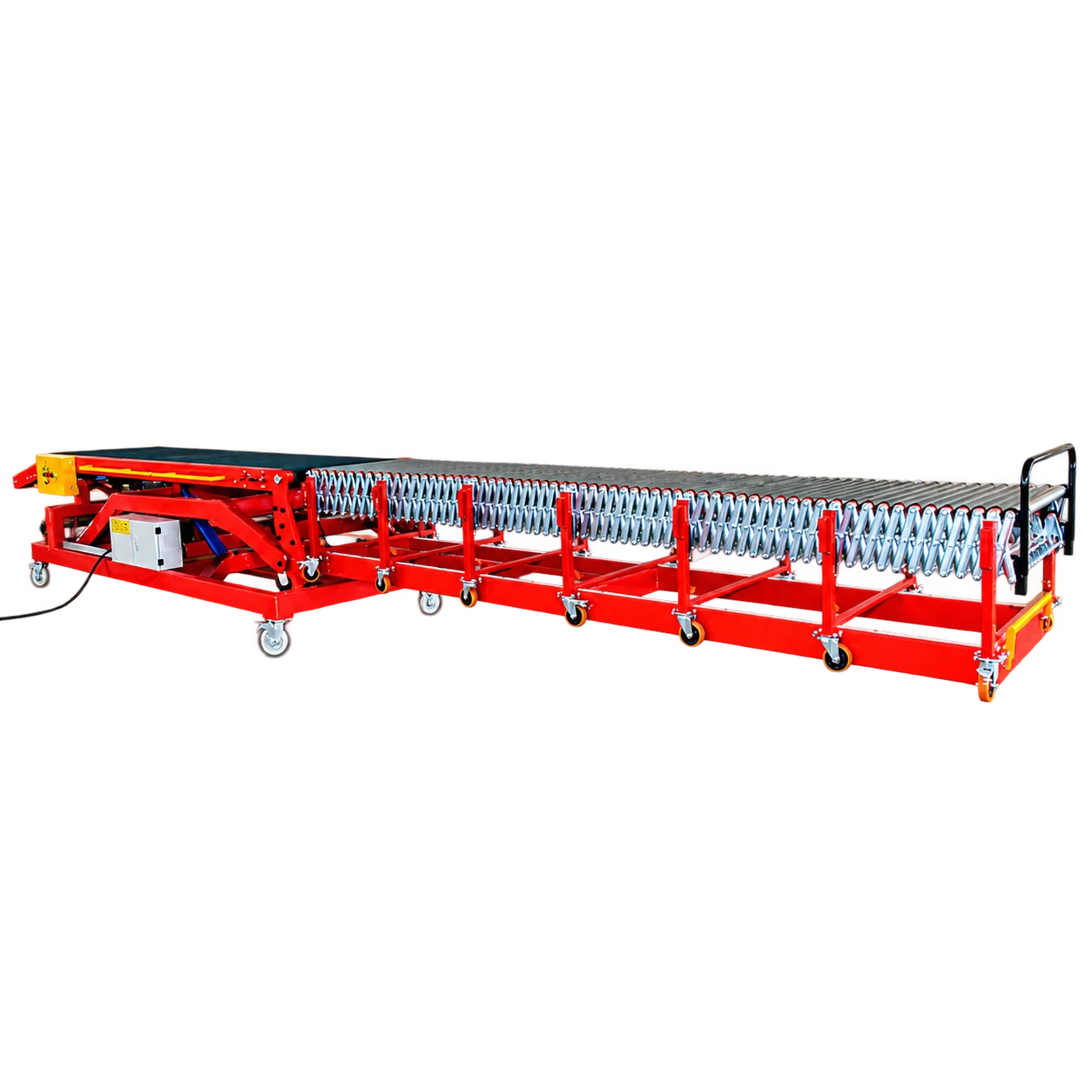
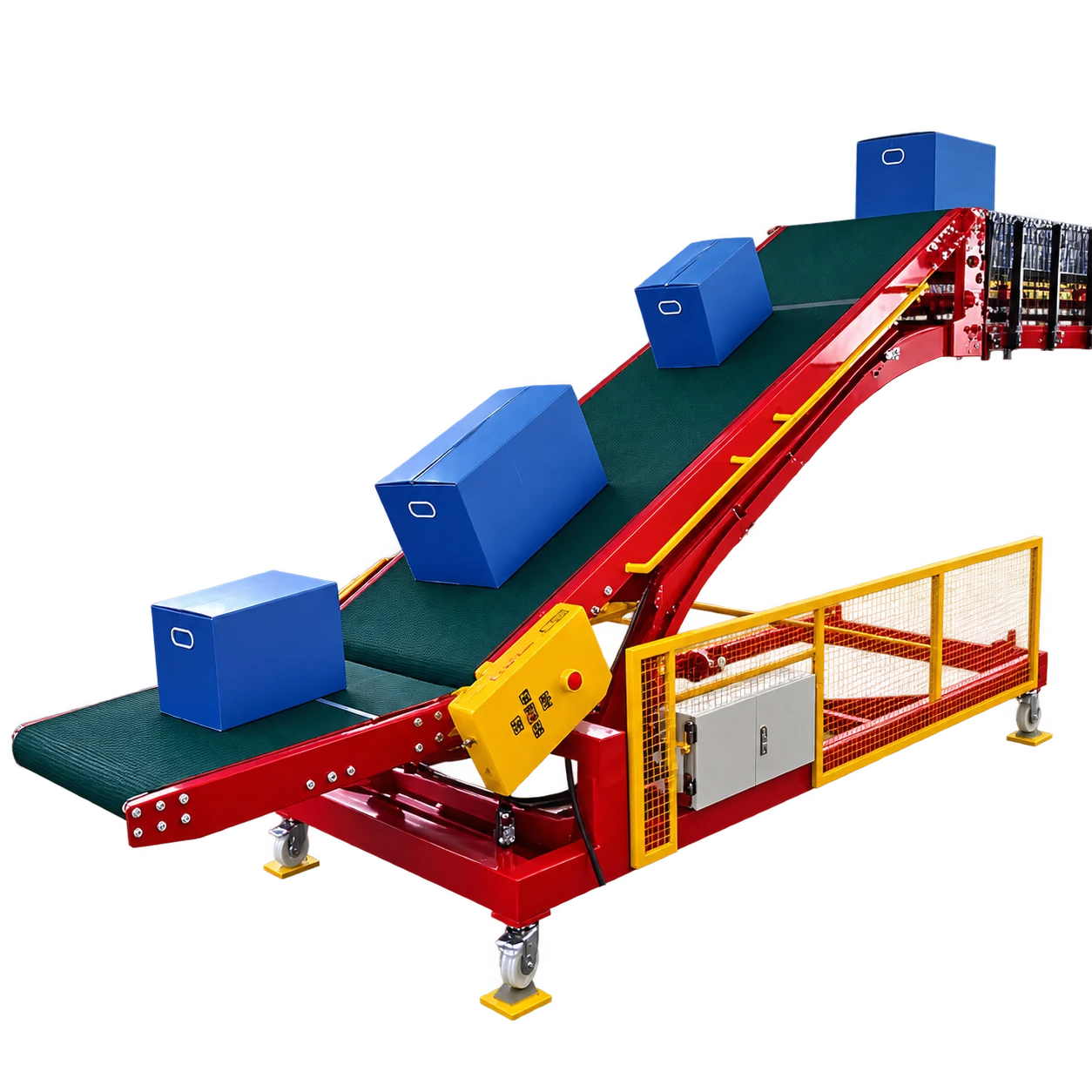
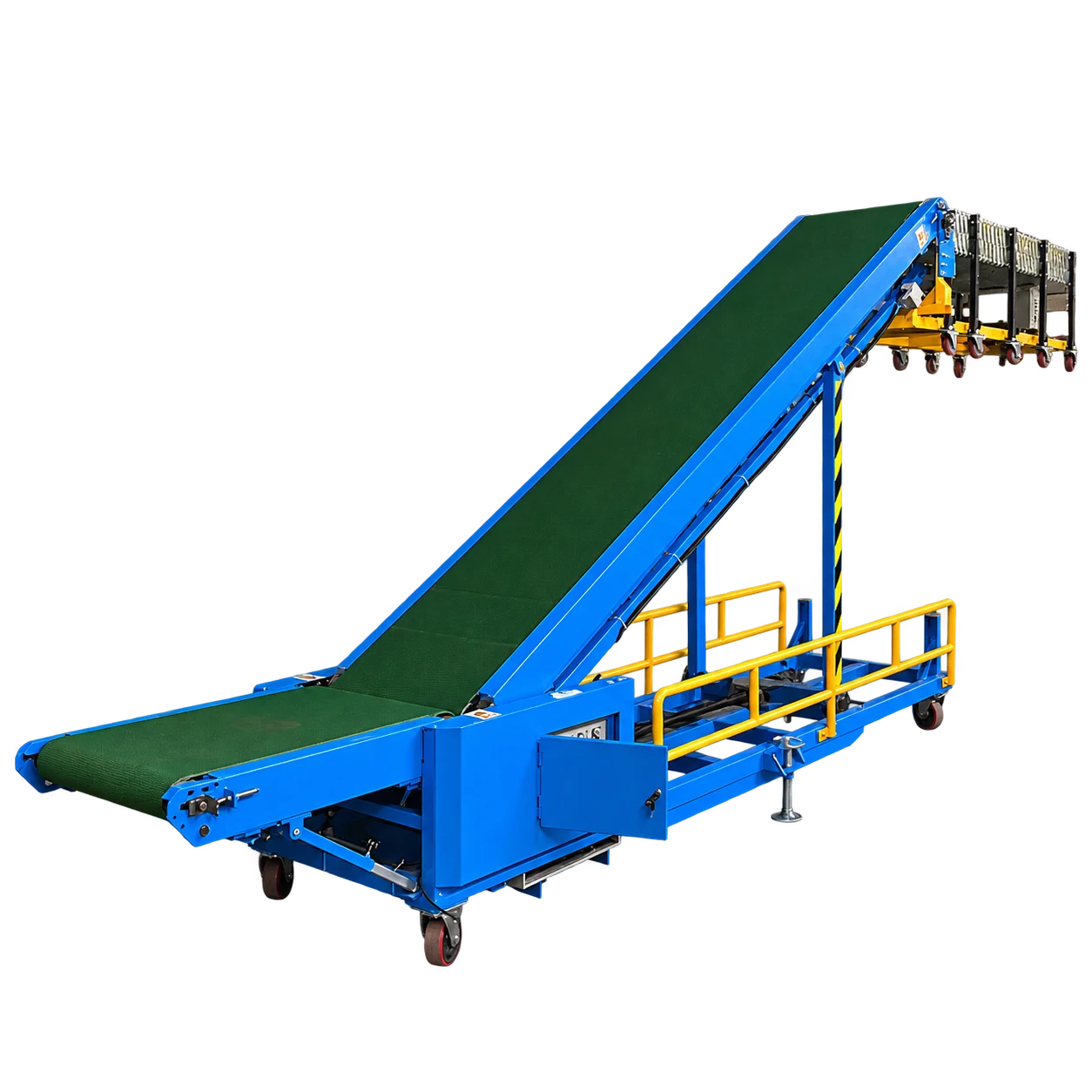
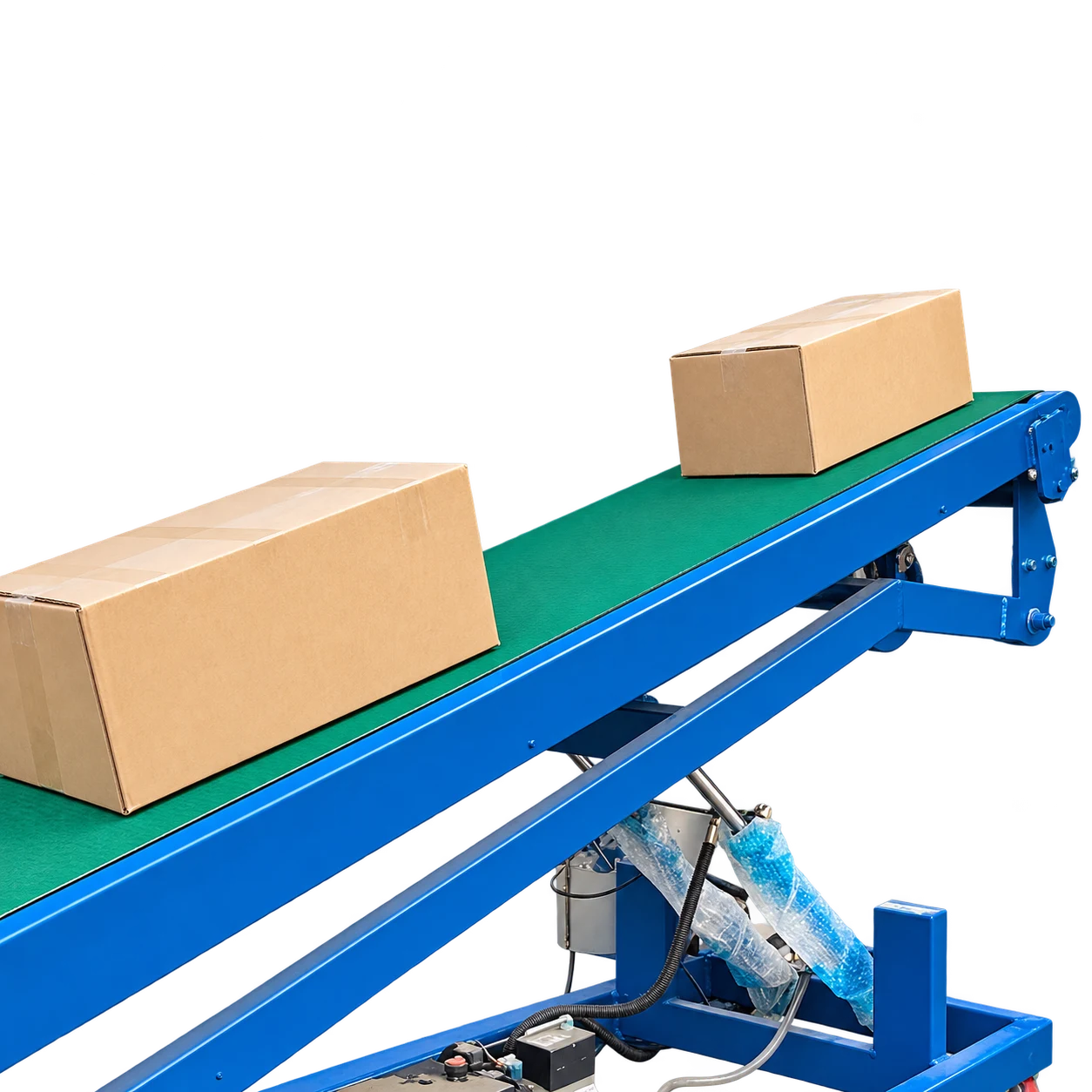
A belt section bridges the handling height while an expandable roller section reaches the receiving position. Both sections need continuous support and a suitable transition for the smallest carton.
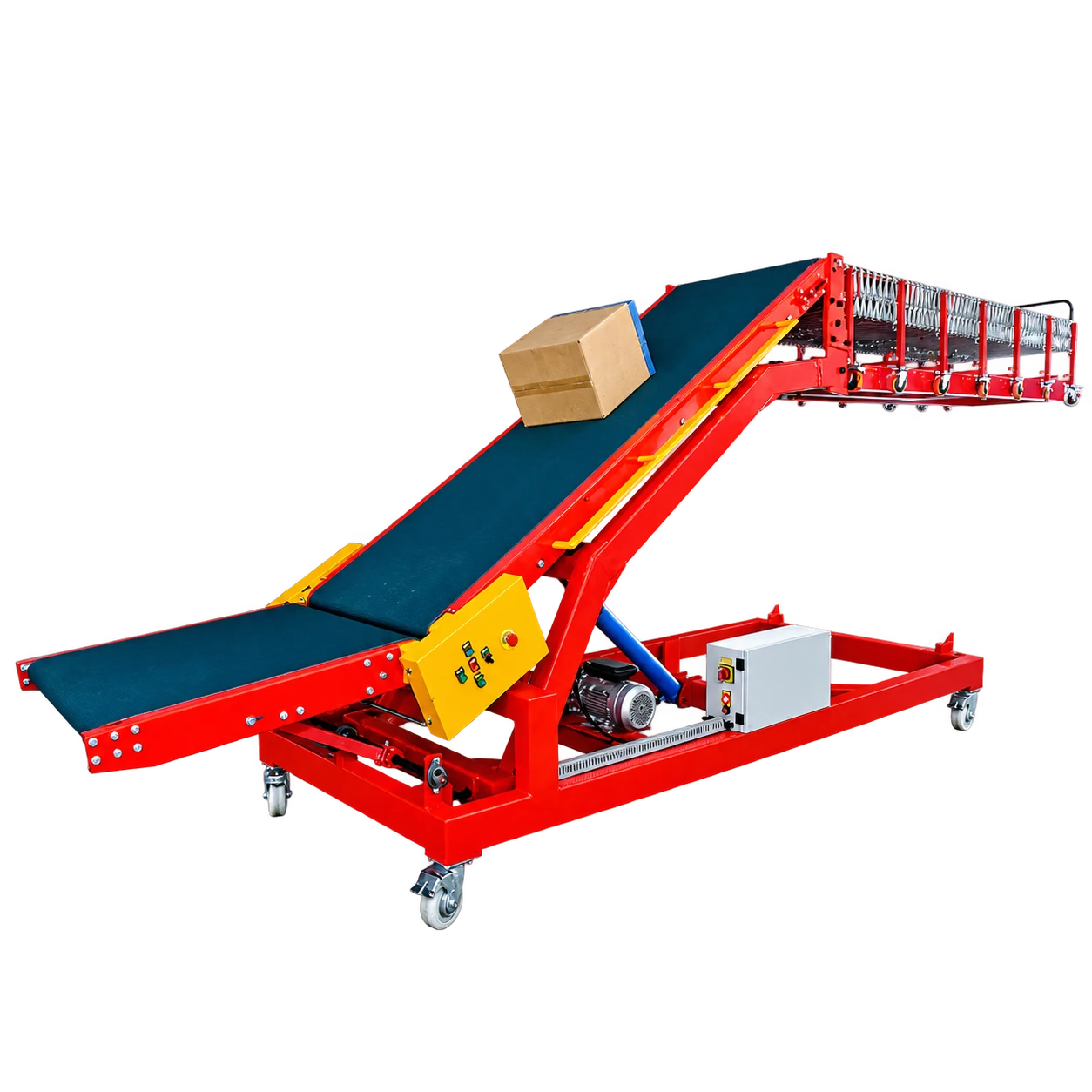
Custom-made truck loading and unloading conveyors combining an inclined belt and supported roller extension. Set width, heights, reach and controls around your cargo and vehicle access.
Every conveyor is custom made for the client. Define the length, width, heights, conveying surface and controls around your operation, with the selected configuration and project scope set out in writing.
Estimated delivery: 60 days. Your written quotation confirms the delivery schedule, freight arrangements and responsibilities for installation and support. Two-year warranty. The written quotation specifies coverage, the commencement date, exclusions, spare parts and service arrangements.
Request a written quote ↗Illustrations show the working concept. Equipment dimensions, finishes, guarding and options are confirmed in your quotation.
A belt section bridges the handling height while an expandable roller section reaches the receiving position. Both sections need continuous support and a suitable transition for the smallest carton.
The roller extension runs on its own supports. Include the vehicle floor, dock edge, available access and the positions of workers receiving and placing goods.
Loading and unloading need the appropriate belt direction, receiving arrangement and stopping controls. Specify both operating modes when both are required.
Plan the complete route between warehouse handling and the vehicle. Cargo size and weight, dock height, vehicle floor, working reach and operator positions determine the belt, roller extension and supports. Loading and unloading directions, receiving conditions and the space required for repositioning are specified for the proposed arrangement.
Illustrative workflow for discussing your project. This is not a dimensioned installation drawing or a completed customer project.
Draw the vehicle floor, dock edge, incline and supported roller extension separately. Check operator access, reversing flow and the smallest parcel at the belt-to-roller transition.
For a nested belt boom extending into a vehicle: Telescopic belt conveyors ↗
Each loading conveyor is made to order around the cargo, warehouse and vehicle relationship. Reach, width, height and the supporting arrangement must fit the same handling task.
Set the warehouse and vehicle transfer levels, working reach and operator positions. Choose the belt section and supported roller extension around the cargo and available access.
Define the vehicles and bays served, movement route, parked envelope and power connection. Mobile supports, controls and line connections are selected around the intended positions.
Every conveyor is made to order. These dimensions are configuration references, not a limit on the width, length or working height you can request. We select the final dimensions and options together for your goods and layout.
A roller extension into the container is available at additional cost. The listed 1,700 mm dimension is arm ground clearance.
Send your required length, usable width, inlet and outlet heights, and goods dimensions and weight. Include any requirements outside these reference sizes for configuration review.
These application details define the made-to-order conveyor. Include the dimensions and operating requirements you know; the remaining choices can be developed from your handling task.
A starting configuration for quotation, with dimensions and equipment selected to suit your project. The figures below apply to this reference arrangement.
These dimensions describe one mobile incline arrangement, not a telescopic belt boom. The 1,700 mm arm clearance and 2,300 mm conveying height are different measurements; section lengths do not establish a combined working reach.
The two 1.5 kW entries describe separate components, not a confirmed whole-machine connected load. The quotation defines supply, controls, rated load, vehicle interface and any additional roller extension.
Download configuration reference (HTML) ↓Reference updated 24 October 2026
The selected conveyor is configured to connect with your equipment and site. Include the destination, transfer levels, power supply and control signals. The quotation defines the delivery schedule and installation, connection and commissioning responsibilities.
Explore the configuration, integration and ordering decisions for this equipment. Send your load details and layout to discuss your own project.
Yes. The belt and roller dimensions, transfer heights and working reach are configured around the cargo, dock and vehicle. The extension must have suitable support throughout the intended route.
Send the vehicle or container type, floor height, opening, available internal space and dock relationship. Include where operators stand and how goods reach the conveyor from the warehouse.
State both directions and describe how goods are fed and received in each mode. Drive direction, controls, operator positions and transitions are configured for the required sequence.
No. This arrangement combines an inclined belt with a roller extension on its own supports. A telescopic belt boom extends a continuous belt in nested stages and requires a different layout assessment.
Provide minimum and maximum dimensions, base material, weight and condition of the goods. The smallest base determines the support needed at roller gaps and the belt-to-roller transition.
Describe the sustained flow, short peaks, hours of work and how operators feed and receive the goods. Belt speed alone does not define the complete loading rate or the duty of the selected arrangement.
A movable configuration can be selected around your working positions. Include the travel path, floor, turns, parked space, power and a repeatable connection to each receiving line.
Cargo width and load, belt length, roller extension, height range, supports, mobility and controls determine the equipment scope. Freight, installation, connection and commissioning responsibilities are identified in the written quotation.
Estimated delivery: 60 days. The written quotation confirms the custom arrangement, destination and schedule. All products are CE certified; the company is registered in Lithuania.
These are separate dimensions. In the container-loader reference, arm ground clearance is 1,700 mm and belt conveying height is 2,300 mm. Tail height is 970 mm, with a listed 700–1,000 mm adjustment range. Match the inlet, outlet and vehicle-floor relationship in the selected layout.
No. This reference has an 800 mm belt within a 1,320 mm overall machine width. Goods width, usable belt surface and site footprint are different checks. Allow for the complete machine, operator access and adjoining equipment when planning the loading position.
Send your name, email and handling task. If known, add the goods, desired length, usable width and inlet/outlet heights to your message. These technical details are optional.
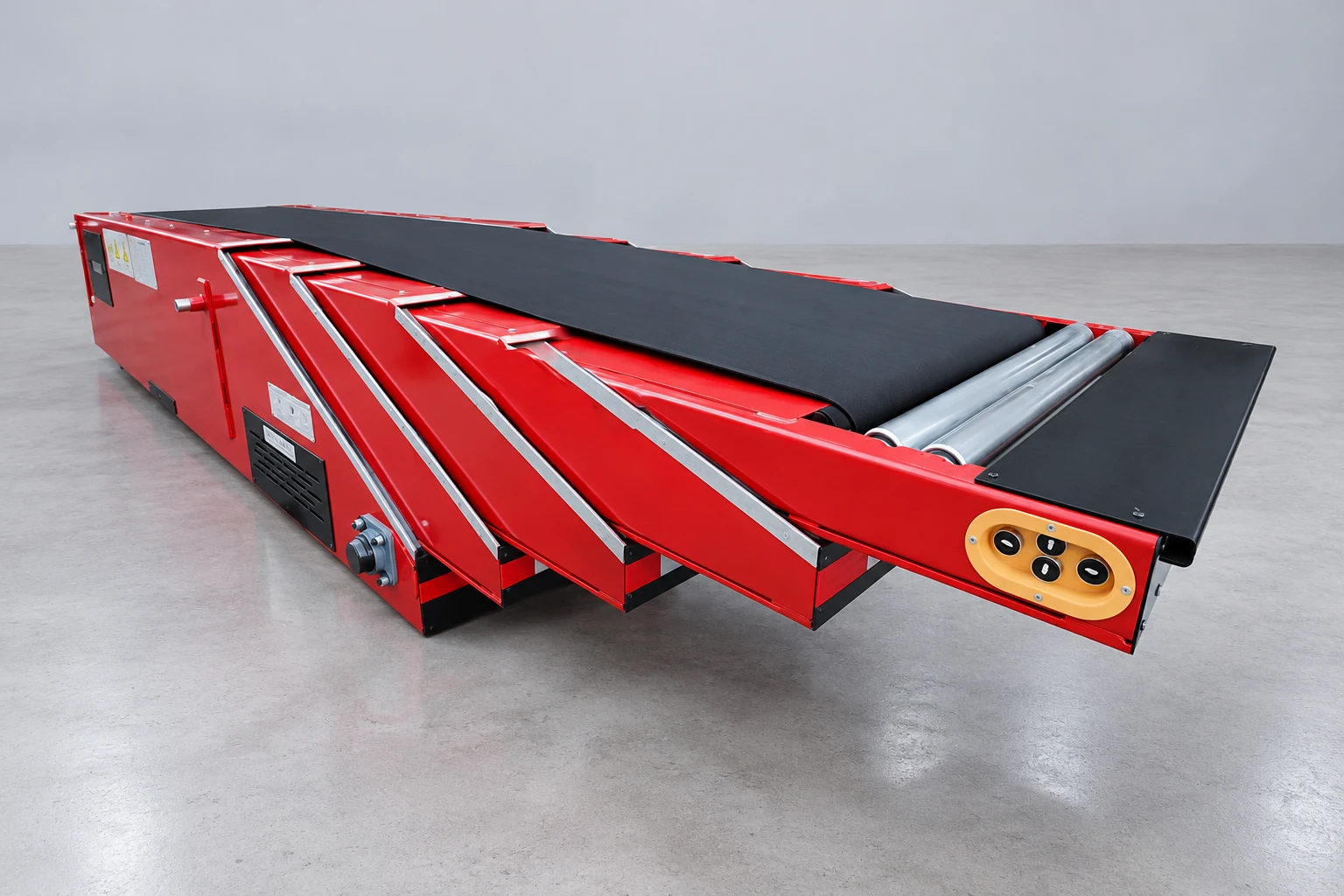
Custom-made telescopic belt conveyors for truck and container handling. Configure the retracted envelope, working reach, belt width, heights and controls around your loading bay.
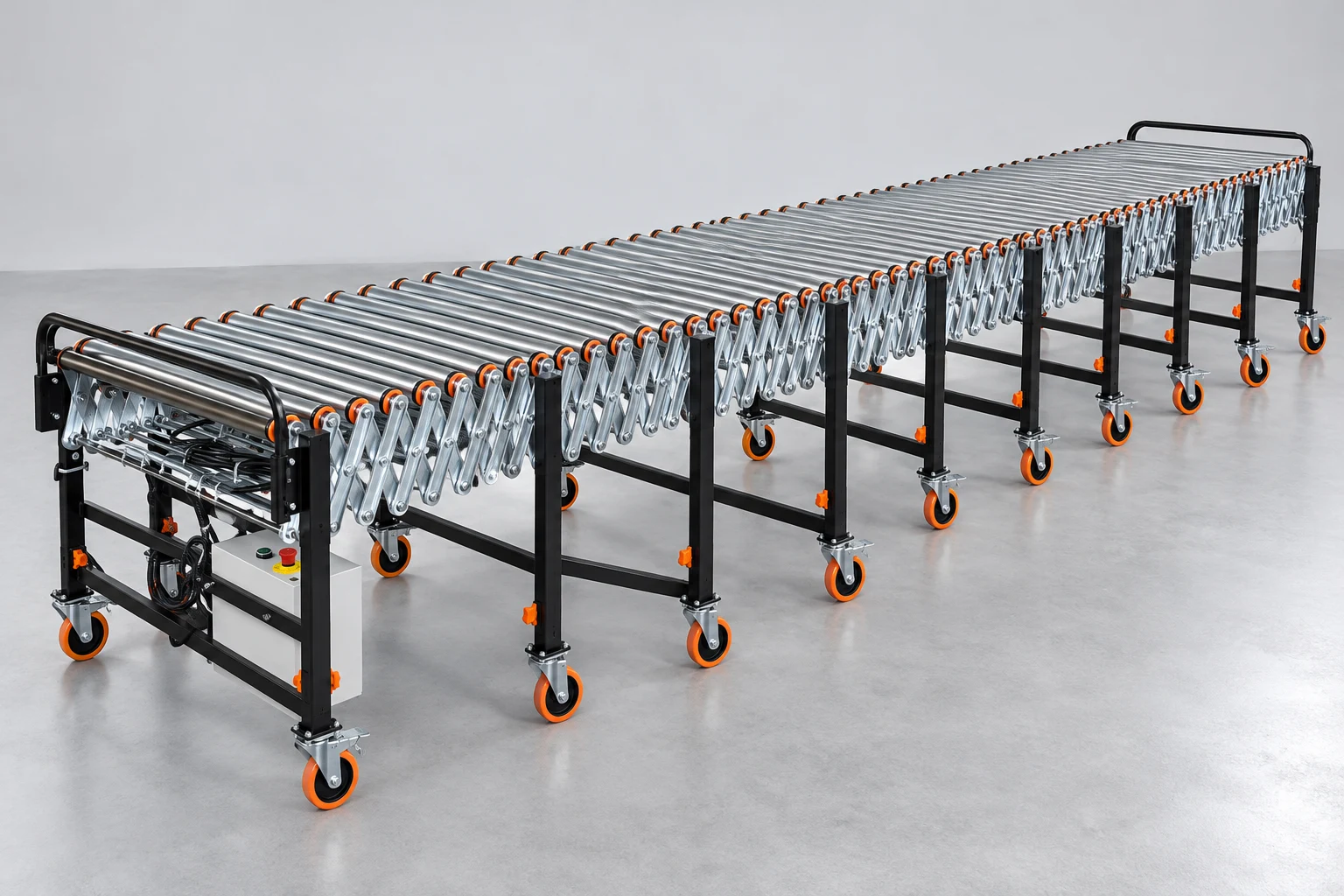
Custom-made powered flexible roller conveyors for changing packing and dispatch routes. Choose working and retracted lengths, width, height and drive controls together.
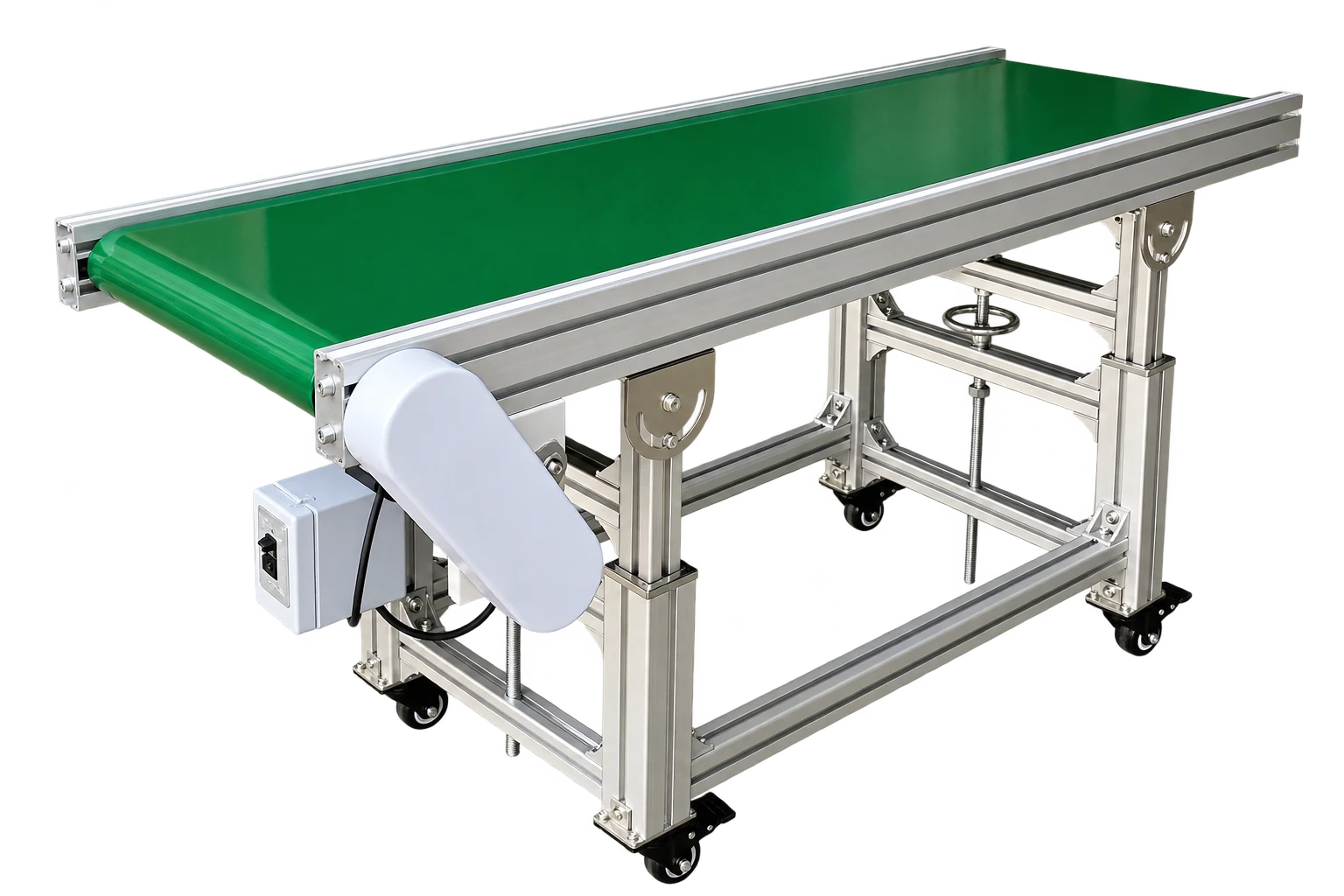
Custom-made belt conveyors for cartons and unit loads. Configure the length, width, transfer heights, belt surface and controls to connect your handling process.