
Unit load or pallet load?
State point loads, pallet runners, uneven weight and impact at loading. Heavy-duty construction is selected for those conditions; the linked equipment families are starting points, not a shared load rating.
Solution studio
Plan component and finished-goods movement, transfer points and the handover to palletizing or shipping around the actual load and process.
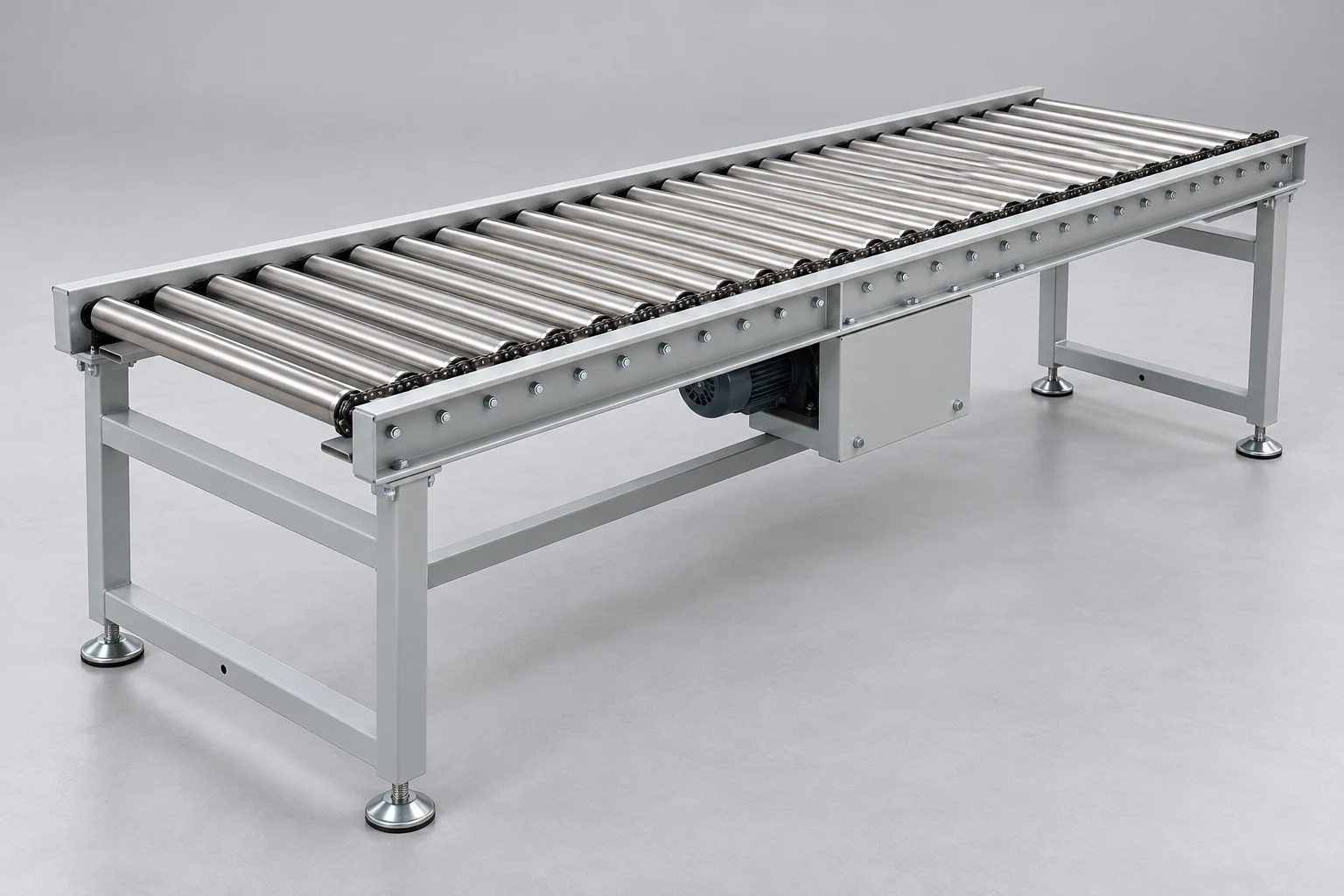
Heavy or bulky products need a load-specific handling design. Start with the complete load, its support points and its centre of gravity, then map the route through inspection, sorting and end-of-line handover. A carton conveyor rating must not be applied to a pallet or a concentrated component load.
Select the roller or belt construction for the actual support points and load condition.
Equipment in this solutionDefine direction changes and positioning at the next operation.
Equipment in this solutionAgree the interface to packing, palletizing or shipping equipment.
Equipment in this solutionCustom-made powered roller conveyors for cartons and rigid totes. Configure the length, usable width, transfer heights, roller support and controls around your line.
Custom-made belt conveyors for cartons and unit loads. Configure the length, width, transfer heights, belt surface and controls to connect your handling process.
Custom-made pop-up conveyor transfers for right-angle goods movement. Configure the module width, length, transfer heights, support pattern and sequence around your adjoining lines.
Custom-made vertical conveyors for moving goods between levels. Configure lift height, carrier dimensions, transfer positions and the operating sequence around your building and load.
State point loads, pallet runners, uneven weight and impact at loading. Heavy-duty construction is selected for those conditions; the linked equipment families are starting points, not a shared load rating.
A conveyor handover and a complete palletizing cell have different scopes. Specify the receiving height, positioning accuracy, release signals and responsibility for downstream machinery in the proposal.
The proposal defines the goods, layout, controls, software interfaces, guarding, delivery and commissioning responsibilities. Capacity and acceptance criteria are specified for the selected configuration.
Palletizing equipment, integration and commissioning are defined separately in the project scope. Describe the complete end-of-line task so the proposal can identify every interface and supplied machine.
Start with the movement of goods. Explore complete conveyor layouts, compare the equipment at each stage and prepare a project brief for your site.
Link production, inspection and packing with the right support surface, transfer arrangement and buffer positions for your goods.
Plan receiving, gentle product transfer and packing for food and mushroom processes, with materials and cleaning requirements defined for the application.
Connect assembly, testing, carton packing and finished-product routing in a conveyor layout suited to your appliance range.
Send your name, email and handling task. If known, add the goods, desired length, usable width and inlet/outlet heights to your message. These technical details are optional.